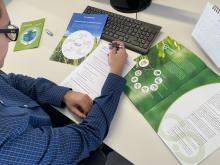
In June 2019, Altstoff Recycling Austria (ARA) and Circle Economy released the Circularity Gap Report Austria, the first measure of circularity for a nation state.
ACR+ has created 3 new working groups on circular economy focusing on governance, procurement, and monitoring. They will bring together front-runners and learners to work on improving local and regional strategies on circular economy and resource efficiency.
Between 2018 and 2019, knowledge brokerage between Slovenia and Portugal took place on waste collection and treatment, reuse and repair facilities as well as communication strategies.
SCALER provides mechanisms to accelerate the journey towards efficient and quick implementation of industrial symbiosis in the European process industry. They do this by developing action plans and adapted solutions to industrial stakeholders and communities.
SCALER works closely with a wide range of stakeholders including industrial networks, consultancies, researchers and policy makers at various geographic and political levels, to deliver practical tools and guidelines for industry actors engaging in resource efficiency, reuse and sharing.
To achieve this goal, SCALER is developing a set of reports and guides. They offer insights into how businesses can start industrial resource synergies with other companies to minimise their waste and create more value from their production.
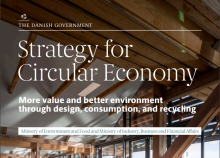
In 2018, the Danish Ministry of Environment and Food and the Danish Ministry of Industry, Business and Financial Affairs launched a Strategy for Circular Economy, based on recommendations by an Advisory Board for Circular Economy. The strategy will be implemented in the period 2018-2022. The government launched initiatives within six thematic areas:
Strengthening enterprises as a driving force for circular transition
Supporting circular economy through data and digitalisation
Promoting circular economy through design
Changing consumption patterns through circular economy
Creating a proper functioning market for waste and recycled raw materials
Circular economy (CE) appears everywhere in Europe to be an adequate response to the challenges of resource scarcity. Driven by the development of the European CE Package, many initiatives to accelerate the transition are emerging, both on governmental and private levels, but they lack coordination.
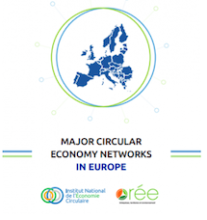
In the wake of the new Circular Economy Action Plan published by the European Commission in March, the "Institut National de l'Economie Circulaire" (INEC) - member of the ECESP Coordination Group - and Orée have co-authored a study identifying the major CE networks in Europe in order to strengthen the cooperation needed to achieve CE ambitions. By so doing they have pursued their common aim to develop and disseminate a vision of an inclusive and unifying CE.
Le Fonds ING pour une Economie plus Circulaire apporte son soutien à celles et ceux qui exercent leurs compétences et leur métier en vue d’une utilisation optimale des ressources naturelles.
During the financial year 2019, the Plastics Technology Centre AIMPLAS presented more than 80 circular economy projects, taught 25 courses on the topic and sponsored 26 talks by its experts.