The Royal Swedish Academy of Engineering Sciences (IVA) has always been a meeting place for Sweden’s future. It builds bridges between the business community, the public sector, academia and the political sphere.
Its two-year project "Resource Effectiveness and the Circular Economy" was aimed at making Sweden more competitive in a future with finite resources, in line with the UN’s Sustainable Development Goals, by economising on resources and developing new technologies, services and business models in five areas:
premises,
mobility,
textiles,
food and
plastics.
Read the synthesis report, marking the completion of the project, which presents the most important conclusions, recommendations and action plans from the five subprojects.
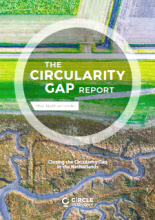
The Dutch economy is 24.5% circular. Measures in four key sectors can triple the national circularity rate and help the government achieve its ambitions for a fully circular economy by 2050.
On 3 June, Circle Economy launched the Circularity Gap Report for the Netherlands. The report shows that the Netherlands is a circular frontrunner: the country's circularity rate is three times higher than the global rate of 8.6%. Consuming 221 million tonnes of materials each year, the Netherlands retrieves one quarter from non-virgin, secondary sources. However, if the government is to achieve its ambitions of full circularity by 2050, a major overhaul of the national economy, including jobs, will still be necessary.
Holland Circular Hotspot is a private-public platform in which companies, knowledge institutes and local authorities collaborate to promote and support international collaboration and knowledge exchange on Dutch circular economy, and the Netherlands Enterprise Agency, a government agency for sustainable, agricultural, innovative and international business development and growth, have come together to share insights, networks and resources to help kickstart circular developments that will boost the Sustainable Development Goals (SDGs).
Circular examples from various market segments closely linked to SDGs such as agri-food, manufacturing and the built environment are included in the brochure next to cross-sectoral topics such as consumer goods or plastics.
In its role developing scientific research and innovation in various fields, including the circular economy, IRCEM has organised several thematic workshops and conferences.
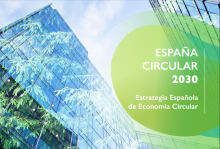
At the beginning of June 2020 the Spanish Government published España Circular 2030, the new Strategy for Circular Economy in Spain until 2030. It contains circular economy objectives and a series of strategic orientations for the period 2020-2030.
The strategy:
sets up a series of objectives for 2020-2030 which will, inter alia, allow a 30% reduction in the national consumption of resources and a 15% reduction in waste generation (as compared to 2010);
contributes to Spain's efforts to transition to a sustainable, decarbonized, resource-efficient and competitive economy;
takes the form of successive three-year action plans providing for concrete measures to deliver on circular economy.
The 2019 Overview of Circular Economy in Europe by Ecopreneur.eu is a landscape review of circular economy policy across the EU Member States. It aims to inspire these countries to accelerate their circular transition.
History of IRCEM - the Romanian Institute for Research in Circular Economy and Environment “Ernest Lupan” - and development of ROCES - Romania's Strategy for the Transition to a Circular Economy (ROCES) 2020-2030
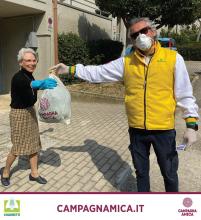
Copa-Cogeca is sharing the initiatives of its members that demonstrate the many actions taken by EU farmers and cooperatives to deal with the Covid-19 crisis.