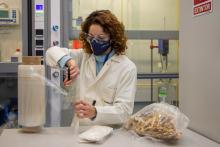
Trifilon uses a consistent source of plastic from a European stream and reinforces it with plant fibres, thus improving the properties of the recycled plastics. These can be used to produce a range of colours and surface finishes, matte or polished.
The EPA is seeking proposals from the research community to help identify solutions to climate change and other emerging and complex environmental problems.The funding will be provided under the four EPA Research 2030 interconnected research hubs, including "Facilitating a green and circular economy".
Precious Plastic was launched in the Netherlands in 2012. It brings together the solutions needed to tackle plastic waste, by boosting recycling, promoting new biodegradable materials or adopting zero waste lifestyles - whatever works.
In workspaces, waste plastic is transformed into valuable raw materials (Shredder, Extrusion, Sheetpress, Injection and Mix).
Collection Points gather plastic from neighbours, organisations and businesses to be processed by local Shredder Workspaces.
Community Points grow the local recycling network.
Machine Shops produce and build parts, machines and moulds for others in the local recycling network.
Members help with plastic collection and spreading the word.
The idea is to get everyone involved and playing their part.
ACR+ is launching a publication on the development and implementation of circular bioeconomy strategies in different contexts, focusing on three detailed regional case studies in Navarre, Bayern and Flanders.
Under a cooperation agreement with the French Pays de la Loire region, ACR+ has set up a working group on the circular bioeconomy, with a focus on governance. The working group aims to support the development of local and regional roadmaps for the circular bioeconomy, as public authorities steer and support the development of the circular bioeconomy on their patch.
The publication is the result of activities implemented by ACR+ through the working group.
Commissioned by the Scientific and Technical Advisory Panel (STAP), which advises the Global Environment Facility (GEF), and co-authored by Circle Economy and Shifting Paradigms, this report uncovers the range of socio-economic and environmental co-benefits that circular mitigation interventions can bring to GEF countries of operation.
The report supports strategic advice by the STAP to the GEF and its implementing partners, and helps carve out a role for these bodies in accelerating the transition to a low-carbon circular economy. Its findings will be highly relevant to the development of future GEF projects and programmes across its different focal areas.
The NoVAqua project found that the countless thousands of litres of waste water thrown away by the fish processing industry was essentially nutritious stock which can be put to better use than just pouring it down the drain...
New sustainable packaging will extend guacamole’s shelf life by 15% thanks to labels and additives extracted from the avocado itself. The GUACAPACK Project aims to use renewable sources to develop an innovative biodegradable packaging system that includes barrier labels and antioxidant additives from avocado waste.
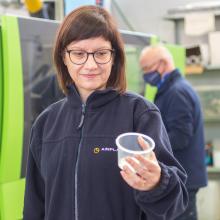
Fishing industry by-products and municipal solid waste are transformed into bioplastics in the European DAFIA project, coordinated by AIMPLAS. DAFIA provides the automotive and food packaging industries with sustainable solutions by developing biopolymers, flame-retardant additives and barrier packaging.
Refarmed uses the concept of ‘building integrated agriculture’. High-impact buildings (meaning they produce a lot of waste and excess heat) are equipped with rooftop greenhouses which turn all that waste into value - to support low-impact food production.