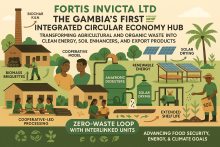
Fortis Invicta Ltd is launching The Gambia’s first integrated circular economy hub. This replicable model is aligned with the principles of the EU Green Deal and the African Circular Economy Alliance (ACEA) and is designed to transform agricultural and organic waste into clean energy, soil enhancers and high-value export products.
This roadmap is designed to enable national governments to shift from a linear to a circular economic model.
It sets out a step-by-step process for countries, starting with planning and engaging stakeholders, then forming a dedicated team, identifying key stakeholders and thoroughly analyzing the country's current economic framework to find opportunities for circularity.
Drawing insights from global case studies, it offers practical solutions tailored to each developing country's unique context. It highlights the importance of collaborative efforts involving businesses, international organisations, academic institutions, financial entities and NGOs.
It aims to empower nations in the Global South to embrace sustainable development, environmental preservation, and economic resilience.
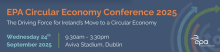
Ireland's Environmental Protection Agency hosts an annual Circular Economy Conference to discuss priority topics and highlight the opportunities and challenges in transitioning to a circular economy in Ireland.
This year's event will focus on topical areas, such as the forthcoming EU Circular Economy Act, making circular models more competitive and extended producer responsibility in priority sectors. Through ‘Local Circular Solutions’ presentations, enterprises will showcase their circular business models.
Nordic Sustainable Construction is a programme set up under the Nordic Council of Ministers. It aims to create a green transition with green growth in the Nordic societies by working toward carbon neutrality and a sustainable, circular and bio-based economy based on knowledge, innovation, mobility and digital integration.
In May 2025, it began three new work packages to create best practice guidelines for the industry and map industry structures and practices to find improved solutions.
The Nordic Climate Forum for Construction 2025 will bring together Nordic construction authorities, policymakers and industry stakeholders to share insights and progress on the circular, green and digital transition in the building sector.
It will focus on improving Life Cycle Assessments and gaining knowledge about how to optimise the usage of existing buildings.
Circular Week is an international series of events and initiatives dedicated to the circular economy and sustainable development, taking place across Europe.
It aims to promote the concept of a closed-loop economy, support sustainable business models and foster collaboration among stakeholders.
Naturalmat is an SME that makes organic, natural mattresses, toppers and bedding, using materials that are biodegradable or recyclable.
They have initiated a number of circular projects, such as their Mattress for Life InitiativeTM which gives owners the option to have their old mattress refurbished, recycled or donated if it's still usable.
Denuo is the Belgian federation of recycling and waste management businesses. It aims to help shape the future of used materials and build a sustainable and circular economy.
It represents over 250 companies active in the collection, sorting, processing and recycling of used materials, land and wastewater and is aiming to increase this number. These companies are pivotal in ensuring that materials are reused and not lost.
Denuo also provides expertise to help other companies become more circular.
The Commission's public consultation on the forthcoming Circular Economy Act is still open. It will gather input from a wide range of stakeholders and the broader public on the bottlenecks and opportunities involved in rolling out a circular economy.
If you're active in the circular economy field, you must have views on this: this is your chance to tell the Commission!