The 14th International Conference on Sustainable Development (ICSD 2026) aims to promote international collaboration in sustainability science and related disciplines.
The call for papers is now open! Deadline for submitting abstracts:10 March 2026.
The Horizon Europe project DECISO (DEvelopers of CIrcular SOlutions) aims to support European cities and regions as they develop financing schemes for circular economy initiatives. The project's final event will showcase how European cities and regions overcome financing barriers impeding circular economy initiatives.
This video prepared by the ECESP Leadership Group on Economic Incentives gives an introduction to economic incentives, their advantages over regulatory obligations and social education and their role in achieving a more sustainable future for all.
Join the European Investment Bank's C3 team and circular economy experts for the first event of a new C3 Circular City Seminar Series targeted at city and region representatives.
The InvestCEC project was tested in the city of Klagenfurt, Austria. At this final event, it will showcase its experience and main achievements in developing a replicable model to initiate circular economy projects in regions and cities.
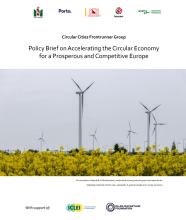
A coalition of European cities has published a policy brief calling on EU institutions to strengthen the enabling framework for local circular economy implementation. The Circular Cities Frontrunner Group, consisting of cities such as Amsterdam, Milan, Malmö, Copenhagen, Turku and Porto, has developed the brief as a shared contribution to the EU’s 2024-2029 political cycle.
The policy brief builds on a joint open letter addressed to Members of the European Parliament in late 2024 and outlines how cities can help scale the circular transition - if the right policy conditions are in place.
The brief contributes to ongoing discussions around the Circular Economy Act, the EU’s competitiveness agenda and the future of multilevel governance.
The European Commission is launching a call for applications for the third mandate of the Platform on Sustainable Finance, to run from the first quarter of 2026 to the fourth quarter of 2027. The platform is an advisory body made up of experts from the private and public sectors which advises the Commission on sustainable finance policies. Apply by 23:59 CEST on 10 September!
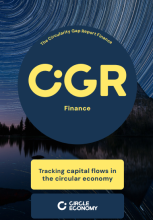
The Circularity Gap Report Finance offers a global overview of known investments in businesses engaging with the circular economy over the six-year period between 2018 and 2023. By creating a clear snapshot of circular economy investment volumes, it aims to improve circular economy financial reporting, support impactful capital allocations to the circular economy and inform impactful investment decisions.
This report is intended primarily for financial market participants, financial sector regulators and policymakers - as well as anyone interested in reading about how the circular economy and finance come together.
Mexico Circular Hotspot will take place on 5-6 November. It will focus on bringing together stakeholders from business, governments and knowledge institutions to advance the circular economy in Mexico and the Americas.