The Circular Economy Show Podcast looks at the various aspects of the circular economy and the people driving it. There are over 200 episodes so far, covering a huge range of issues.
This conference will tackle climate change and ways to prevent it, including innovative solutions that can be implemented under the Green Deal Strategies.
They're calling for abstracts: the deadline is 1 September!
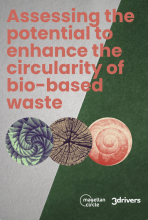
This study commissioned by the EEA assesses the potential to enhance the circularity of bio-based waste within the framework of the 2025 update of the EU Bioeconomy Strategy.
It focuses on identifying opportunities to move bio-based waste streams up the waste hierarchy, retain technical and economic value and minimise environmental impacts.
The study maps waste generation, collection, treatment and reporting practices across the EU and the technologies for managing biowaste.
It finds that better separate collection and development of high-value recovery pathways could reduce environmental pressures, greenhouse gas emissions and import dependence, though technological feasibility and scalability remain uncertain.
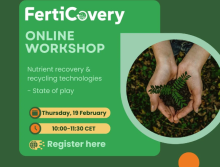
The FertiCovery project focuses on nutrient recovery and the production of fertilisers from biowaste, manure and wastewater.
This workshop will bring together project partners and stakeholders to review, discuss and validate the final list of indicators which will serve as the basis for benchmarking nutrient recycling and biobased fertiliser production technologies.
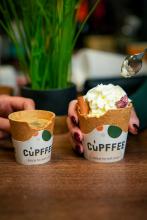
Cupffee cups are designed to replace single-use plastic and paper ones. They are made from plant-based material and using a zero-waste production process.
The ESNI-NERM (The European Sustainable Nutrient Initiative (ESNI) Conference and the Nutrients in Europe Research Meeting (NERM) conference will be an opportunity to present and discuss scientific evidence and technological innovations that can support the European Commission’s goals on nutrient management.
The ESNI-NERM conference will be an opportunity to present and discuss scientific evidence and technological innovations that can support the European Commission’s goals on nutrient management.
The conference will take place on 28-29 April and they are calling for abstracts. Deadline: 30 January!
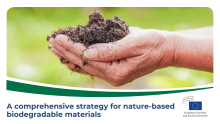
This public hearing is organised in connection with the opinion being prepared by the EESC on A comprehensive strategy for nature-based biodegradable materials to foster circularity and resource efficiency, strengthen the agri-food sector and scale-up the EU bioeconomy. The hearing will gather input for a comprehensive strategy for nature-based biodegradable materials.
The EU Food Loss and Waste Prevention Hub is a one-stop-shop for stakeholders active in the area of food loss and waste prevention and reduction, across the EU and beyond. It's a source of information on what's going on in this community!
On 7 November, the Commission granted over EUR 358 million to 132 new projects across Europe under the LIFE Programme for environment and climate action. Read about a few of the projects selected to promote the circular economy!