The Circular Economy Action Group, the business initiative promoted by Forética in Spain to lead the transition of companies towards a circular economy model, has produced a report entitled "The reality of plastics: myths and truths" [La realidad de los plásticos: Mitos y verdades].
The aim of the report is to ensure a better understanding of plastic waste pollution, thus promoting the foundations of the new plastics economy. It also outlines the actions to be taken in order to improve plastic circularity.
Forética's mission is to promote the integration of social, environmental and good governance aspects in the strategy and management of companies and organisations with one objective: to achieve a sustainable future.
Aragón Circular is an economic strategy that aims to boost the circular economy in the entire region of Aragon. Its objective is to create a political, economic, and social framework that will allow Aragon to move towards an innovative circular economy. Furthermore, this strategy will generate high-quality employment and provide the backbone for the territory.
The Circular Aluminium Action Plan is the aluminium sector’s strategy for achieving aluminium’s full potential for a circular economy by 2030. The action plan aims to ensure that all end-of-life aluminium products are collected and recycled efficiently in Europe to maximise the aluminium recycling rates and to keep the material in active use. It builds on the aluminium industry’s Vision 2050 and provides policy recommendations for the sector.
The aluminium industry has the potential to be a key driver in achieving Europe’s ambitions for a climate-neutral and circular economy. Aluminium is by nature circular and fit for multiple recycling: it can be recycled over and over again without losing its original properties (lightness, conductivity, formability, durability, impermeability).
Circular economy (CE) appears everywhere in Europe to be an adequate response to the challenges of resource scarcity. Driven by the development of the European CE Package, many initiatives to accelerate the transition are emerging, both on governmental and private levels, but they lack coordination.
In the wake of the new Circular Economy Action Plan published by the European Commission in March, the "Institut National de l'Economie Circulaire" (INEC) - member of the ECESP Coordination Group - and Orée have co-authored a study identifying the major CE networks in Europe in order to strengthen the cooperation needed to achieve CE ambitions. By so doing they have pursued their common aim to develop and disseminate a vision of an inclusive and unifying CE.
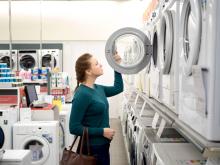
How can sustainable consumption and longer lifetime of products be promoted through consumer protection legislation?
This in-depth analysis investigates the contribution, or lack of contribution, of the current EU consumer protection legislation to sustainable consumption and longer lifetime of products. In addition, it gives an overview of the most relevant best practices at national and international level and provides recommendations on the future development and possible reforms of European consumer protection legislation with a view to more sustainable consumption and longer lifetime of products.
This study was commissioned by the European Parliament Committee on Internal Market and Consumer Protection (IMCO).
How can the EU product safety and compliance framework help promote product durability and tackle planned obsolescence, foster the production of more sustainable products, and achieve more transparent supply chains for consumers?
Product longevity can play a useful role in achieving the Paris Agreement goals – material efficiency is an important contributor to energy efficiency and is also important in its own right. The product safety and compliance instruments available at European level can contribute to these efforts, if wisely applied.
This study was commissioned by the European Parliament Committee on Internal Market and Consumer Protection (IMCO).
This review paper of Mark Anthony Camilleri examines relevant regulatory guidelines, policies, and recommendations on sustainable development, where it traces the origins of circular economy (CE). It goes on to shed light on key theoretical underpinnings of CE's closed loop and product service systems.
The findings suggest that the CE's regenerative systems minimise the environmental impact as practitioners reduce their externalities, including waste, emissions, and energy leakages through the use and reuse of resources. Therefore, this contribution offers a critique on CE's inherent limitations and discusses about the implications of having regulatory interventions that are intended to encourage responsible consumption and production behaviours.
Le secteur de l’événementiel est plus que jamais concerné par les enjeux de durabilité et de préservation des ressources. Conscients de la nécessité de concilier l’organisation d’événements et l’économie circulaire, les acteurs du secteur doivent se mobiliser davantage afin de mettre en œuvre les leviers d’action existants.
Today, only 8.6% of the resources and materials in the global economy are reused or recycled.
A crucial transition to a circular economy is required to reach the environmental goals of the 2030 Agenda for Sustainable Development and to achieve countries’ climate targets as set out in the 2015 Paris Agreement.
In this context, it is essential to ensure that the transition to a resource-efficient and circular economic model also delivers on social objectives.
This paper introduces the relevance of the circular economy in the international development SDG context. It also explores how a just transition approach can be successfully applied in the circular economy context.
This analysis by IEEP and SEI assesses to what extent the actions included in the new Circular Economy Action Plan published by the European Commission on 11 March 2020 may contribute to a more circular European economy within the boundaries of the planet.
The authors conclude that the action plan is a promising continuation of existing efforts, but ask for more concrete measures to address unsustainable resource consumption.
The authors make five recommendations to EU policymakers in this regard and emphasise the importance of EU Member States and the private sector showing leadership and willingness to innovate.