Join this webinar organised by the Sustainable Fashion Academy, a non-profit social purpose organisation which aims to accelerate progress towards science-based sustainability targets and the SDGs. Have a look at the European Environment Agency's new metrics for monitoring environmental performance and circularity uptake in the textiles sector.
Come and hear about the Circular Threads 2.0 study which takes stock of circularity in Northern Italy and seeks to apply circular economy principles to the textile industry there.
The circular economy is reshaping how we use natural resources, but how far have we come? Are products in Europe truly lasting longer? Is the European economy becoming more circular?
This European Environment Agency webinar will explore these questions and more, drawing insights from the EEA’s latest briefings.
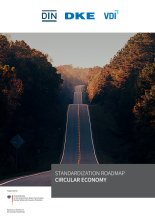
This Standardization Roadmap aims to provide an overview of the status quo of standardization in the field of the circular economy, to describe the requirements and challenges for seven key topics, and to identify possible needs for future standards and specifications.
The 2025 Basque Circular Summit will be the largest event on the circular economy in southern Europe this year. It will analyse the challenges and opportunities posed by the circular economy for companies, society and the economy in the Basque Country and show what has already been achieved.
The network properties of the global waste trade were assessed using time series data of material and monetary flows between 2000 and 2022 from Chatham House's experimental database. The study focused on the distribution of monetary and material flows, policy recommendations and future research avenues useful for obtaining a more comprehensive understanding of socio-economic systems such as trade networks.
This work is a solid example of the application of network-based methods as an eco-mimicry approach for assessing the sustainability and fragility of socio-economic systems which can be helpful for researchers and policy makers interested in transitions towards regenerative circular economies.
Filippos K. Zisopoulos, Brian D. Fath, Susana Toboso-Chavero, Hao Huang, Daan Schraven, Benjamin Steuer, Alexandros Stefanakis, O.Grant Clark, Serban Scrieciu, Simron Singh, Dominik Noll, Martin de Jong
This study assesses the network properties of the global trade in waste metals and the distribution of material and monetary flows across trading countries using a bio-inspired approach.
Due to homogenization, high network redundancy and low network efficiency, the trade remained robust yet outside the "window of vitality" characterising natural ecosystems. A few, mostly high-income countries dominated the market, consolidating imports of high-value metal waste, mostly from low- and middle-income exporters.
Policies should address circularity and trade inequities, accounting for environmental and social ramifications throughout the lifecycle of products and materials.
The HOOP project has provided Project Development Assistance to eight lighthouse cities and regions, supporting them with the development of large-scale urban circular bioeconomy initiatives focusing on making bio-based products from urban biowaste and wastewater. The partners have developed a suite of open-source tools to help cities and regions launch urban circular bioeconomy projects.
TCO Certified has over 30 years' experience of driving sustainable development in the IT industry. By continuously developing criteria and verification methods, it tackles new challenges such as circularity, hazardous substances, and socially and environmentally responsible manufacturing.
RedGirraffe ESG Horizon is a software as a service solution designed for enterprise resource planning. It supports the circular economy by enabling precise tracking and optimisation of Scope 3 emissions across global supply chains.