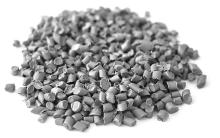
Ecoplasteam has created a new plastic material - EcoAllene™ - integrally recycled, this material contains two of the three layers - paper, polyethylene and aluminium - of "tetrapak" packaging.
Documento de Posición: La Estrategia Europea sobre los Plásticos y la Propuesta de Directiva relativa a la reducción del impacto ambiental de determinados productos de plástico
In this position paper, the Spanish Fondacion para la Economia Circular (Foundation for the Circular Economy), summarises the policy initiatives on plastics published by the European Commission in 2018, which includes both the Strategy for Plastics in a Circular Economy and the Proposal for a Directive on the reduction of the impact of certain plastic products on the environment.
Outlining its position, FEC argues for instance that:
the plastics strategy is based on ambiguous definitions
rigorous implementation of existing legal obligations in relation to plastics is a priority
The 6th edition of ACI's European Biopolymer Summit will bring the participants up to date on environmental projects, feedstock’s landscape, and the role of biopolymers in the circular economy.
Study on Identifying the Impact of the Circular Economy on the FMCG industry: Opportunities and Challenges for Labour Market, Supply Chains and Consumer Behaviour
The 4th edition of ACI’s European Food & Beverage Plastic Packaging Summit will focus on the industry’s increasing challenges in the way of sustainable packaging, recyclability, packaging performance and consumer experience, with special attention to the European Commission’s Circular Economy Package and its implications for the industry.
Recycled materials as part of raw materials demand (recycled content)
To be achieved by:
100% recycled and other sustainable sourced materials by 2030.
Other (Cotton content)
To be achieved by:
100% recycled, certified organic or sustainable sourced cotton by 2020.
Other (Waste collection)
To be achieved by:
To increase the collected volume of garments to reach 25,000 tonnes annually; achieved in 2019 with 29,005 tonnes of garments collected for recycling and reuse.
Other (Packaging)
Start Date:
100% reusable, recyclable, or compostable plastic packaging
Reduce plastic packaging by 25%
25% post recycled plastic across all packaging used
Other (Packaging)
Start Date:
100% recycled or other sustainably sourced material
Food packaging facilitates storage, handling, transport, and preservation of food and is essential for preventing food waste. In the existing economic system, food packaging is generally designed for single-use and discarded after relatively short periods of time, a scheme that is no longer acceptable in the transition to a circular economy.
This paper offers a detailed analysis in food packaging materials with respect to properties, recycling, and contaminants. It also discusses different approaches such as weight reduction versus recyclability or deposit and reuse schemes for permanent material-based food packaging.
On the 24th of May, C&A Foundation, together with Ecopreneur.EU hosted a Circular Fashion Policy Lab in Brussels at the European Economic and Social Committee in the context of the Circular Economy Stakeholder Platform. The purpose of the event was to bring together representatives from across the fashion industry to discuss key policy measures to make a meaningful impact for a green economy.
Three circular solutions – developed by over 60 people from 13 countries across the world – are set to help transform Glasgow's thriving events industry.