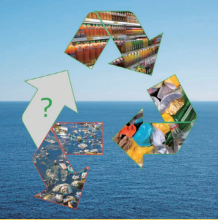
Packaging plastics can offer an almost infinite range of options for manufacturers, both in terms of function and design. Their durability and resistance to degradation means that if they ‘leak’ into the environment, they stay there. Leakage has been increasing rapidly and its detrimental impact, especially on the marine environment, has attracted wide public and political concern.
EASAC established in 2018 an Expert Group to look at scientific aspects of plastics packaging and the circular economy. This report is the result of an 18-month investigation and reviews the negative consequences of the current linear economy for plastic packaging, the scope for improvement towards a more circular pattern and options for increasing recycling rates and reducing leakage into the environment.
This retrospective report is a review of the plans set out by Circular Flanders in the Kick-off Statement.
The most important finding? A good deal more was accomplished than initially anticipated. For example, the opportunity to launch three Open Calls, permitting the funding of over 130 innovative circular economy projects. The Green Deal on Circular Construction was also an unprecedented opportunity, as was the complementary reinforcement of the OVAM team of experts in ecodesign and area-specific operations, allowing the scope to expand.
This retrospective report is an interactive PDF. External links to downloads or online resources have been embedded on each project page for easy accessibility.
Citeo is a non-profit active in the field of Extended Producer Responsibility relating to paper and packaging. It works to reduce its environmental impact.
Under the Environmental code, producers and distributers are responsible for - and must pay the costs of – dealing with the waste generated by the packaging used by their products. Companies can transfer their responsibility in this area in exchange for paying to join Citeo. The funds thus collected are used to finance the collection, sorting, recycling and reuse of packaging.
Members also have access to support from Citeo's experts, enabling them to apply eco-design principles to paper and packaging, inform their customers about the products' environmental characteristics and plan for the impact of French and European regulations.
CuanTec is a Scottish blue biotech company that replaces plastic with natural alternatives. Sourced from waters of the Atlantic, CuanTec takes waste from fisheries and obtains the natural biopolymer chitin. Their process uses biology rather than chemistry to create chitin and chitosan of high quality and purity, which are in demand for over 3 000 industrial uses around the world.
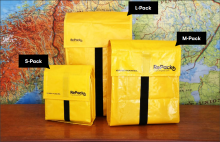
RePack is the easiest way to implement circular economy in eCommerce. Using reusable and returnable RePack packaging service means sustainability in every package.
The reusable RePack bags are and made of durable and recycled materials and come in three adjustable sizes. They replace single-use packaging as the customer chooses RePack as the mean of package for delivery.
Sulapac has developed a fully biodegradable and microplastic-free material which can replace plastic. The bio-based material is both recyclable and mass-producible and is available as granules or final products.
With funding from the German Federal Ministry of Education and Research (BMBF), the Circular Economy Initiative Deutschland (CEID) was initiated in 2019.
In three working groups on Circular Business Models, Traction Batteries and Packaging, 130 experts from more than 50 institutions from science, industry, politics and civil society discussed how to enable and establish circular economic systems.
Recommendations were summarised in the Circular Economy Roadmap for Germany. The roadmap was published on 11 May 2021 and officially handed over to the BMBF.
Given the growing demand for electric vehicles, CEID is currently engaged in the Battery Pass project. This focuses on the sustainable production, use and recycling of lithium-ion batteries and the digital battery passport.
One of the Interreg DTP MOVECO (Mobilizing Institutional Learning for Better Exploitation of Research and Innovation for the Circular Economy) project results is the Transnational Strategy to accelerate transition towards a circular economy in the Danube region.
Reducing disparities within the Danube Region can only happen through cooperation, capacity building and knowledge exchange across borders. This also holds true for the implementation of the circular economy to make the Danube Region, as a resource poor region, less dependent on imported primary resources.
MOVECO identified key challenges with regard to the transition towards a circular economy and offers recommendations for progress. The strategy further provides the reader with many good practice examples.