The European Green Deal sets out ambitious goals for plastic packaging products in the EU, which include ensuring that all products on the market are reusable or recyclable by 2030. The European project CIRC-PACK shared key lessons at its final online event in March.
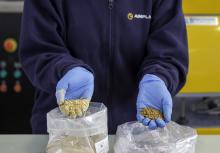
According to the 7th edition of the International Seminar on Biopolymers and Sustainable Composites organized by AIMPLAS on 4 and 5 March, bioplastic production is expected to increase by 15% by 2024 and is carving out a niche in the construction and automotive sectors.
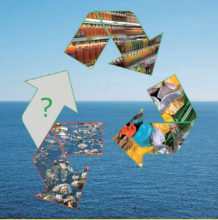
Packaging plastics can offer an almost infinite range of options for manufacturers, both in terms of function and design. Their durability and resistance to degradation means that if they ‘leak’ into the environment, they stay there. Leakage has been increasing rapidly and its detrimental impact, especially on the marine environment, has attracted wide public and political concern.
EASAC established in 2018 an Expert Group to look at scientific aspects of plastics packaging and the circular economy. This report is the result of an 18-month investigation and reviews the negative consequences of the current linear economy for plastic packaging, the scope for improvement towards a more circular pattern and options for increasing recycling rates and reducing leakage into the environment.
This retrospective report is a review of the plans set out by Circular Flanders in the Kick-off Statement.
The most important finding? A good deal more was accomplished than initially anticipated. For example, the opportunity to launch three Open Calls, permitting the funding of over 130 innovative circular economy projects. The Green Deal on Circular Construction was also an unprecedented opportunity, as was the complementary reinforcement of the OVAM team of experts in ecodesign and area-specific operations, allowing the scope to expand.
This retrospective report is an interactive PDF. External links to downloads or online resources have been embedded on each project page for easy accessibility.
Citeo is a non-profit active in the field of Extended Producer Responsibility relating to paper and packaging. It works to reduce its environmental impact.
Under the Environmental code, producers and distributers are responsible for - and must pay the costs of – dealing with the waste generated by the packaging used by their products. Companies can transfer their responsibility in this area in exchange for paying to join Citeo. The funds thus collected are used to finance the collection, sorting, recycling and reuse of packaging.
Members also have access to support from Citeo's experts, enabling them to apply eco-design principles to paper and packaging, inform their customers about the products' environmental characteristics and plan for the impact of French and European regulations.
Delft University of Technology (TU Delft) is offering a 100 % online course on Sustainable Packaging in a Circular Economy. Students and professionals with basic knowledge of the circular economy and an interest in or experience of packaging can start studying anytime, at the time and place of their choosing. The course material is accessible 24/7. This is a Massive Open Online Course (MOOC) that runs on edX.
The course programme includes:
Business strategies that support sustainable packaging systems
Opportunities for designing with renewable, bio-based materials
Best practices through case studies with industry frontrunners
How circular design principles can be applied to create 'closed loop' packaging systems.
The Polish Chamber of Digital Economy, an Ecommerce Europe member, has published a report on sustainability in e-commerce.
This report, titled Green Generation, shows that Polish consumers generally spot environmentally-unfriendly behaviours of retailers, but they do not quite want to take responsibility for making e-commerce less harmful to the environment; only one in five consumers is willing to wait longer for a shipment to be delivered through a grouped consignment.
As they already engage in some environmentally-friendly practices, such as collecting parcels from dedicated points, they do not seem willing to take up financial responsibility, such as paying extra charges for more ecological packaging or deliveries.
CuanTec is a Scottish blue biotech company that replaces plastic with natural alternatives. Sourced from waters of the Atlantic, CuanTec takes waste from fisheries and obtains the natural biopolymer chitin. Their process uses biology rather than chemistry to create chitin and chitosan of high quality and purity, which are in demand for over 3 000 industrial uses around the world.