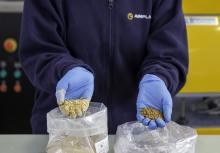
The European Commission is planning to review the requirements on packaging and packaging waste in the EU. It is keen to have feedback from citizens and stakeholders on the subject, which will be taken into account when it comes to further developing and fine-tuning the initiative.
The European Policy Centre’s (EPC) Task Force called Digital Roadmap to Circular Economy has explored the linkages between digitalisation and circular economy, the opportunities created by data and digitally-enabled solutions, and the challenges associated with harnessing their full potential for the transition to a circular economy.
The project represents a pioneering endeavour in exploring the interconnections between the digital and green transformations and considers the implications for EU policymaking.
The final publication The circular economy: Going digital and its executive summary show that digitalisation can offer enormous possibilities for the transition to a more sustainable, circular economy but it is essential to steer it in the right direction.
Jerónimo Martins, a food retailer operating in Colombia, Portugal and Poland, has implemented various measures to reduce the amount of food wasted in its operations and value chains, and promotes recycled and recyclable packaging.
The GLOPACK (Granting society with LOw environmental impact innovative PACKaging) project, funded by the European Union’s Horizon 2020 research programme, investigates food packaging with no environmental footprint and the ability to extend the shelf-life of food products.
The GLOPACK position paper aims at clarifying many debatable points related to bioplastics and biodegradability, especially terminology, and focuses on the benefits of biodegradable (in natural conditions) packaging material that can help the food sector enter the virtuous loop of the circular economy.
The paper also proposes some recommendations (basic, strategic and tactical interventions) to help all stakeholders in the food packaging sector to align with the common goal of ending plastic pollution.
PackAlliance aims to modernise Higher Education curricula to better serve the plastic packaging sector's labour market needs. It has therefor prepared a questionnaire to gather information on the skills needed in the circular economy applied to this sector. Which skills are vital in the plastic packaging transition to circular economy?
ACI’s Future of Polyolefins Summit, on 20 and 21 January 2021 in Antwerp, will provide the perfect opportunity to meet with leading executives and experts from across the entire value chain.
Le secteur de l’événementiel est plus que jamais concerné par les enjeux de durabilité et de préservation des ressources. Conscients de la nécessité de concilier l’organisation d’événements et l’économie circulaire, les acteurs du secteur doivent se mobiliser davantage afin de mettre en œuvre les leviers d’action existants.
AIMPLAS, the Plastics Technology Centre, and OLIPE, Olivarera de los Pedroches, have carried out a project entitled GO-OLIVA, aimed at finding a high value-added application for olive stone waste by producing a new sustainable material for oil product packaging.