The EU Green Electronics Working Group brings together representatives from Horizon Europe projects dedicated to promoting greener and more sustainable electronics across Europe. The goal is to enhance visibility and coordination between them and advance green electronics by developing innovative materials, next-generation manufacturing processes and improved recycling techniques.
Poly(L-Lactide) (PLA), a fully biobased aliphatic polyester, constitutes around 30% of global production of biobased and/or biodegradable plastics.
It has attracted significant attention in the last decade due to its exceptional properties, such as high tensile strength, biocompatibility, (bio)degradability in various media, easy recyclability and good melt-state processability by the conventional processes of the plastic/textile industry. PLA has a number of applications, such as packaging and controlled release matrices for fertilisers and pesticides.
This paper looks at how blending PLA with other polymers can improve its shortcomings.
In this webinar, EuRIC will present its EU Plastics Recyclers Roadmap, outlining key actions to foster a more innovative and competitive sector. Industry leaders will also share insights on overcoming challenges and advancing circularity in the plastics value chain.
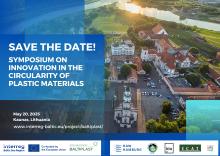
Are you passionate about sustainability, innovation and tackling the challenges of plastic waste? The Symposium on Innovation in the Circularity of Plastic Materials is your opportunity to contribute to shaping the future of plastic materials.
This CEPS In-Depth Analysis examines the role, state of play and future prospects of standardisation of critical raw materials (CRM) from an EU perspective.
It begins with an overview of the key benefits and actors in both the EU and global technical standardisation system.
It then maps key recent developments and initiatives in CRM standardisation, in the EU and globally. Drawing on consultations with experts, it identifies three fundamental risks and challenges: the limited participation of EU stakeholders and experts, specific content gaps in recycling and traceability, and a highly fragmented ESG standardisation landscape.
Lastly, it provides policy recommendations to help address these challenges and enhance the EU’s role in CRM standardisation.
Recycling Albania was set up in 2022, based on the zero waste hierarchy. It aims to transform Albania’s waste sector into a model for sustainable resource management and lead the way in circular economy solutions in the Western Balkans.
It's setting up a Circular Economy Park, with a Multifunctional Education Centre, Recycling Yard and Second-Hand Store. The environmental, economic and social dimensions of the circular economy are covered!
The European Commission has just released its Competitiveness Compass, a roadmap for EU action over the next five years which lists what needs to be done to enable the European economy to flourish.
It sets out ways and means to deliver on the imperatives identified by the Draghi Report to boost competitiveness: closing the innovation gap, a joint roadmap for decarbonisation and competitiveness, and reducing excessive dependencies and increasing security.
The circular economy is seen as part of the answer.
Re:inventex is carrying out a project for the recycling of post-industrial and pre-consumer textile waste. It is essentially the first pilot project in Ukraine to create a modern infrastructure for the collection, sorting and recycling of textile waste.
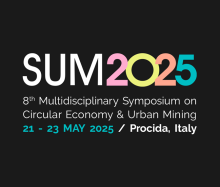
SUM 2025 aims to promote more continuous interaction and collaboration across fields, encouraging sustained, multidisciplinary dialogue and strategic partnerships.
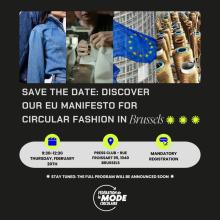
The Fédération de la Mode Circulaire (Circular Fashion Federation) is organising an event which will mark a milestone in their journey towards sustainable fashion: the release of their EU Manifesto for Circular Fashion. This manifesto outlines a policy roadmap for the European Union to leverage circular fashion as a means to bolster its textile industry, promote fair competition and champion environmental and human rights standards.