This is a key event on waste management. 400 or so papers will be presented on issues such as waste policy and legislation and construction & demolition waste from disaster waste during various types of sessions, from Q&A sessions to practical design labs. Come and see what's being done in this field!
The Horizon Europe project INBUILT aims to bring about a shift in the European construction industry by integrating circular economy and digitalisation. It focuses on scaling up and demonstrating 10 innovative products and systems designed to make building practices more sustainable.
These innovations fall into two key categories: Reused and recycled materials which will reduce waste through the smart repurposing of materials from existing sources, and low-carbon building products developed using bio-based or geo-sourced materials to significantly lower the environmental impact of construction.
This booklet presents a series of factsheets outlining each innovation developed by INBUILT. They will be updated when the project comes to an end.
SOPHIA is an EU-funded Horizon Europe project that aims to implement advanced digital solutions in end-of-life solar panels, involving the full value chain in order to increase their current reuse, repair and recycling rates. The end goal is to foster a more circular, innovative and competitive Europe.
THE LIFE BIOBEST project aims to guide the mainstreaming of best bio-waste management and recycling practices, with a view to enriching depleted soil with high quality compost.
Its Comprehensive Guidance sets out key policy recommendations to strengthen the EU legal framework for bio-waste management. Drawing from extensive research and stakeholder consultation, it outlines three interconnected areas for improvement: boosting effective models for separate collection and recycling, promoting reliable markets for compost and digestate, and enhancing monitoring and enforcement of bio-waste regulations.
It provides policy measures to help close the gap between current practices and potential capture rates, addressing the fact that only 26% of kitchen waste is collected separately in the EU.
This conference will focus on future-proofing clean energy, end-of-life assets, circular energy markets, and advanced technologies and successful business models.
Join top asset owners, recyclers, manufacturers and investors at the second Recycling Renewables Summit and help shape the future of circular renewables.
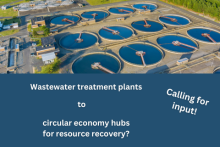
The ReLEAF and UPSTREAM projects are keen to promote the transition of wastewater treatment plants into circular economy hubs for resource recovery. They're asking for input.
The Commission has launched a consultation on harmonising the classification of certain waste types (“green-listed” waste) to facilitate their shipments across borders. It's open until 31 October and aims to gather input from a range of stakeholders on waste streams to be addressed. Let them know what you think!
Characterisation techniques are essential in the plastics sector, as they ensure quality, reliability and safety, promote sustainability and minimise manufacturing risks. AIMPLAS will therefore host the second international seminar on plastics characterisation (CHARPLAST), bringing together international experts to address the main challenges and advances in this field.
Coffee!UP has adopted a unique cascade recycling system for used coffee grounds which is in line with the zero waste concept. In this way, they support the circular economy and thus mitigate the impact on climate change.
Through this system, Coffee!UP obtains high-quality ingredients by gradually removing the valuable parts of coffee grounds. These are then used in the cosmetics industry and serve as an input material for making plastic products.
UtilDeco Group SRL has become Romania’s flagship work-integration social enterprise.
In 2023, it linked its textiles and coffee operations in a circular-economy pilot scheme: fabric off-cuts from uniform production and empty jute coffee sacks were upcycled into OPYA Fashion, a limited-edition collection of jackets, totes and accessories.
The enterprise is now scaling circularity through two major projects, one on digital product passports in textile products and the other on hiring workwear.