Driven by government support, decarbonisation efforts and technological advancements, electric vehicles – with their lithium-ion batteries – are becoming increasingly common. Electric vehicles produce fewer emissions than combustion engine ones, but fewer is not zero. The emissions they do produce across their lifespan (production, use, recycling) need to be mapped.
Calculating their carbon footprint (the total amount of greenhouse gas emissions that come from the production, use and end-of-life of a product or service) is key and required by the Batteries Regulation (EU) 2023/1542.
This paper looks at the challenges of calculating batteries’ carbon footprint and implementing the relevant obligations for companies introducing batteries into the EU market.
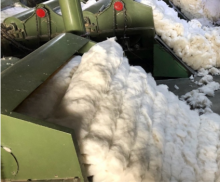
Maiano Re-Lab comes up with sustainable industrial applications for textile scraps from mass-produced consumer goods. This initiative establishes synergies between industrial sectors, minimising waste and promoting sustainability within the industry.
Refashion's Recycle Summit brings together key stakeholders from the textile and footwear sector. It showcases significant achievements in circularity, including groundbreaking technical studies, the development of unique material libraries and measurable environmental impacts. It aims to drive collaboration and innovation, strengthening the adoption of recycled materials and positioning the industry for a sustainable and competitive future.
The 2nd World Congress on Recycling and Waste Management will explore Leading the way in advanced recycling and waste management practices.
It will foster awareness and encourage sustainable practices promoting an eco-friendly environment, delving into advanced topics in recycling and waste management, with the participation of researchers, ecologists, environmental experts and professionals in chemical, civil and mechanical engineering, environmental science and recycling.
Recycling flexible PET packaging is tricky because it is made up of layers but in Spain, recycled polyethylene terephthalate (rPET) is the only type authorised for post-consumer recycled content for food packaging.
The BOTTLE4FLEX project has taken up this challenge and aims to develop 100% recyclable flexible skinpack packaging using rPET.
The ECOFAP project aims to make shoe soles and heels from a material manufactured from tanned leather waste using 3D printing. This research project will help solve the problem of how to recycle leather scraps from the footwear manufacturing industry.
The EcoSynergy System proposes a platform of common interest that brings together experts, companies, ecologists and developers to implement a new circular economy model.
In this model, platform members hand in any type of clean raw materials from packaging owned by individuals, service activities and industry to the EcoSynergy system. These materials are suitable for direct use in industries with a minimal environmental impact, and are monetised in the ECOSS environmental blockchain algorithm.
The ECOSS environmental blockchain algorithm rewards members through economic incentives by enabling them to access food and non-food products directly at production/factory prices.
With demand for lithium-ion batteries increasing worldwide, developing a solid understanding of the environmental and social impacts associated with how they are used is becoming increasingly important.
This eventaims to discuss where we stand in terms of assessing the environmental and social impacts associated with lithium-ion batteries.
How many plastic bottles actually enter the recycling process?
Theory is one thing and reality tends to be another. The Czech Ministry of the Environment wanted to find out what really happens to plastic bottles after they are thrown into sorted bins for plastic waste. It commissioned Adastra to carry out a project using IoT technology to track the movement of sorted bottles.
Multilayer packaging, often based on PET and polyolefins, presents significant challenges for recycling due to its complex structure. The EU Horizon project MERLIN has focused on developing cost-efficient and high-performance solutions for sorting, delaminating and recycling multilayer packaging materials.
As the project draws to an end, policymakers, waste management professionals, packaging manufacturers or researchers involved in plastic recycling and circular economy initiatives are invited to take stock of the project's findings.