The hospitality market is shaped by rising environmental awareness and changing guest expectations, meaning that sustainability is a business imperative. The Accor Group, a hospitality group with over 5800 hotels in 110+ countries, has decided to focus on earning the EU Ecolabel.
The Ibis Styles and Ibis Budget Brest Centre Port in France is its flagship venture in this area and an example of how a hotel can reduce consumption and increase efficiency.
Signify Circle makes lighting products which are resource‑efficient and circular. It factors ecodesign, product-as-a-service, remanufacturing and repair into its business model.
DPPSkop is a comprehensive B2B SaaS platform developed to meet the Digital Product Passport (DPP) requirements mandated under the EU’s Ecodesign for Sustainable Products Regulation.
The platform enables manufacturers, particularly in high-impact sectors such as textiles, batteries and electronics, to digitise, manage and share the lifecycle data of their products.
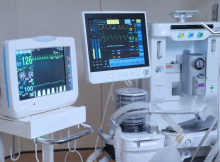
Green Pulse is a European service provider enabling the structured resale and reuse of decommissioned medical equipment from hospitals.
Through a transparent digital sales infrastructure and verified global buyer network, they ensure that equipment remains safely in clinical use worldwide.
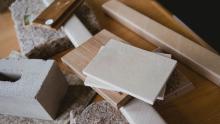
Natura Mater is a Brussels-based company which specialises in training professionals in the use of sustainable construction materials. They have a library of materials and run training courses.
Fibenol transforms forestry and wood industry residues into sustainable biomaterials used in the biomaterials and biofuels, packaging, construction, and food, feed and pharmaceuticals industries.
REkrabička offers a returnable packaging system designed for restaurants, cafés and canteens. Their sturdy reusable food and drink containers can be used 400 times, replacing 400 single-use items.
Eco Bio® Croatia has developed an innovative biopolymer made from fruit and vegetable waste. It is an environmentally-friendly, non-toxic alternative to single-use flexible plastic which can be composted at home.