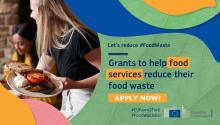
The European Commission is currently accepting proposals for EU grants to help stakeholders take action against food waste. Fighting against food waste is one of the key action strands laid down in the EU’s Farm to Fork Strategy, which aims to make food systems fair, healthy and environmentally friendly.
This report explores whether there are limits to robustness of a socio-economic system as the result of a linear metabolic structure, and how those limits could theoretically be affected by its transition to a circular economy.
First, it looks at how the economic openness of the EU27 would affect the value of its circularity rate theoretically. Then it develops a conceptual framework based on regenerative economics and indicators from ascendency analysis and ecological network analysis.
This framework is used to assess a theoretical future case where the EU27 manages to successfully transition to a CE within its given linear material flow metabolism.
The results show that there are limits to robustness, and which do not necessarily correspond to a maximum circularity rate.
The Ocean Package UG is a young and sustainable company from Munich with the goal to make e-commerce more environmentally friendly and sustainable. For this purpose, they have designed reusable packaging made of recycled polypropylene, which contains a proportion of collected plastic from the North Sea. Their product can be used 20 times more often than conventional cardboard packaging.
The Czech Circular Hotspot is operated by the Institute for Circular Economy (INCIEN), a non-governmental organisation that has been promoting circular economy principles since 2014.
CCH aims to facilitate cross-sectoral and international cooperation in the field of the circular economy. It wants to create a space where the public and private sector can cooperate to accelerate the transition towards a circular economy in Czechia.
The hotspot was set up in 2022, and thanks to strong partners and successful models abroad, it has rapidly grown into an effective network. Members include businesses, SMEs, start-ups, NGOs and academic bodies.
As well as networking opportunities, it provides training sessions and information on overviews and trends.
CIMPA, an EU-funded H2020 project, aimed to develop a recycling chain for post-industrial and post-consumer multilayer films from food and agricultural applications. This complex approach combines innovative compositional sorting, mechanical and physical recycling and an advanced decontamination process.
Are you an official representative of a city/region/basin in which a significant share of economic activity depends on oceans, seas, rivers and lakes? Do you wonder how to implement a RISC-proof blue economy? If so, fill in the OECD survey: Localising the Blue Economy. Towards a Resilient, Inclusive, Sustainable and Circular approach to the blue economy in cities and regions by 16/9/22.
AIMPLAS, the Plastics Technology Centre, has created its own trademark to certify that reusable food packaging is safe and retains its properties after repeated washings. The trademark responds to companies’ need to adapt their products to regulations promoting the circular economy in order to acquire a market advantage.
sets out the background to the Circular Electronics project of the Consumer Insights Action Panel (CIAP),
shares information on the multi-stakeholder circular Electronics Club at the heart of the work, and
provides an overview of the methodology followed in gathering insights, designing and running interventions, and evaluating results and sustainability of the pilots.
It is designed not only to provide an overview of the project’s activities, but also to share learnings, findings and models that could support potential future initiatives in the field of circular electronics and beyond.