Circularity offers pathways to achieve a more sustainable production and consumption and to provide benefits to society. Although sustainability entails an ecological, economic, and a social dimension, the discourse on social aspects seems to have been less prevalent than on economic and environmental ones. Hence the need to further explore the social impacts of circularity and its potential societal benefits.
The aim of this report is to frame, address and better understand questions related to the social impacts of the transition to a Circular Economy. The report synthesises the gathered insights into key emerging themes and identifies gaps or areas of potential in the field as part of the Consumer Insight Action Panel (CIAP) project, led by the CSCP and funded by Sitra and DBU.
On Thursday 23 June 2022, from 13:30 to 15:30 CEST, the United Nations Environment Program will be hosting a webinar to celebrate the 20th anniversary of the Life Cycle Initiative. The event will take stock of how Life Cycles Approaches have accelerated the transition to sustainable consumption and production.
The European Commission has published a call for proposals on “Social innovations for a fair green and digital transition”, under the Employment and Social Innovation (EaSI) strand of the European Social Fund+.
By building on the insights from previous EEA reports on drivers of sustainability transitions, this briefing explores alternative ideas about growth and progress with the aim of broadening the sustainability debate.
Economic growth is closely linked to increases in production, consumption and resource use and has detrimental effects on the natural environment and human health. It is unlikely that a long-lasting, absolute decoupling of economic growth from environmental pressures can be achieved at the global scale. Societies need to rethink what is meant by growth and progress and their meaning for global sustainability.
The briefing outlines how circular economy may not deliver the transformation to sustainability when growth strategy still leads to increased material consumption.
The Roadmap - Towards the Circular Economy in Montenegro aims to steer the transition to a circular economy in Montenegro. It is based on systemic thinking and outlines the main drivers, horizontal and priority areas, opportunities for circular transformation and recommendations for the way forward.
The strategy identifies five focus areas (food and forest systems, the built environment, tourism and manufacturing) that are highly interconnected and, through the principles of industrial symbiosis and synergies, can result in systemic change.
The roadmap is an outcome of collaboration between the Montenegrin Chamber of the Economy, UNDP, Circular Change and Deloitte BiH.
Small Scale Actions (SSA) are a new element introduced for this round of URBACT action planning networks (2019-2022). This compendium summarises all of the SSAs carried out within the Resourceful Cities Network. It aims to support and inspire other cities which want to accelerate their circular transition.
A wide range of SSAs were carried out by Resourceful Cities partners, each one responding to an identified need within the individual city context. Actions included promoting citizen engagement and participation, enhancing knowledge and raising awareness of the circular economy, business support, data collection and monitoring and trialling new business models.
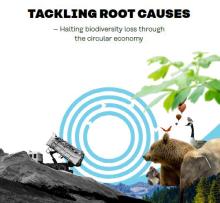
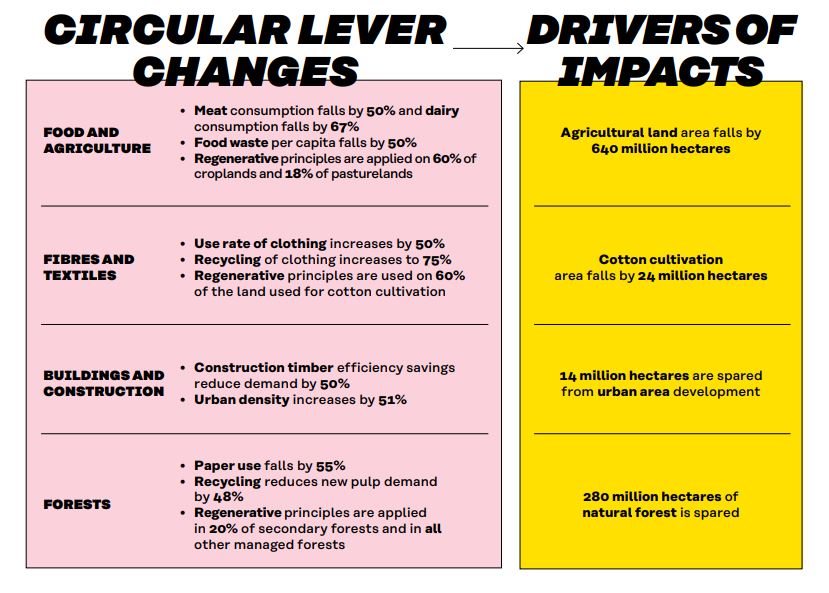
Circular economy interventions in four key sectors can halt global biodiversity loss and help the world's biodiversity recover, finds this study.
Tackling root causes - Halting biodiversity loss through the circular economy, written by experts from Sitra and Vivid Economics, is the first to quantify the role a circular economy can play in tackling global biodiversity loss, targeting the four sectors with the largest impacts:
food and agriculture
construction
textiles
forest and forestry
Circular interventions in these sectors can halt biodiversity loss even if no other action is taken. And more than that, the study finds that the world’s biodiversity can recover to 2000 levels by 2035, if the circular interventions are implemented.
Urgent global action is required to address unsustainable material resource use. This report explores the possibility of, and analyses the implications associated with, developing an international agreement on the management of natural resources.
Why an international agreement?
An international agreement could support
incentivizing action on a global level
generate awareness to tackle the issue of resource management
solve the issue of uncoordinated actions at various regional and governance levels.
The report also looks at the extent to which Free Trade Agreements (FTAs), many of them including provisions relevant to developing circular solutions, cover natural resource management and could be leveraged to enhance resource efficiency.