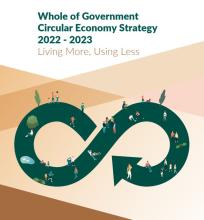
The Whole of Government Circular Economy Strategy is Ireland’s first national circular economy strategy. The Strategy is a key addition to the Government’s drive to achieve a 51% reduction in overall greenhouse gas emissions by 2030 and to get on a path to reach net-zero emissions by no later than 2050, as per commitments in the Programme for Government and the Climate Act 2021.
The Strategy explains what the circular economy is, why Ireland needs to deliver on a circular economy and how national policy will develop to support that goal. A circular economy can have positive environmental, economic and social impacts, such as reduced plastic pollution, new jobs and better quality, longer lasting consumer products.
On 21 January 2022 the ECESP Coordination Group 2020-2023 attended its third meeting which focussed on summarising the numerous achievements from the past year, including the recent Dubai Expo and what the ECESP had achieved there, its future plans and the 2022 programme.
The idea for a new Leadership Group specifically on Circular Procurement started during the ECESP Annual Event in 2020. Twenty-two organisations decided to harness the enormous potential of procurement to accelerate the circular economy in Europe. This outcome document focuses on the Sustainable Products Initiative and mandatory requirements as a driver of the CEAP.
The Leadership Group on Food waste, food systems and the bioeconomy has been working since November 2020 to highlight and raise awareness of the importance and complexity of food systems and the bioeconomy as a driver of the transition towards a circular economy in Europe.
The European Commission is sounding out citizens, consumers and expert stakeholders with a view to the preparation of an EU-wide policy framework for biobased, biodegradable and compostable plastics.
The consultation is open for feedback until 15 March 2022.
In 2021, the Leadership Group on Retailers, Consumers and Skills considered issues such as how to made the electronics sector more circular, how to boost public awareness of the need to become more circular and how to step up training with a view to reskilling and upskilling.
Yuman Village is a temple of the circular economy located in Brussels. It offers a unique 'one stop shopping' experience that encourages the emergence of new circular economy models, creates local jobs and reduces the number of trips needed to buy sustainable and local products.
Madeira Circular brings together key actors for the transition to the circular economy in the Autonomous Region of Madeira. This includes civil society, businesses, public administrations and the scientific and academic communities.
It looks at regulations and financing and explores sectors relevant to Madeira which can be shifted to a more circular approach, such as tourism, production of local products and civil engineering.
The platform looks at recycling and how to combat food waste and provides recommendations in the fields of water, waste and energy.
Waste prevention is the best waste management policy option, according to the waste hierarchy - the EU's main rule for the environmental ranking of waste management policies. Its main objective is to reduce waste generation, the environmental impacts of waste management and the hazardousness of the waste generated.
To support this objective, the EU and all its Member States have put in place legislation that promotes activities in products' life cycles aimed at reducing the amount of waste generated.
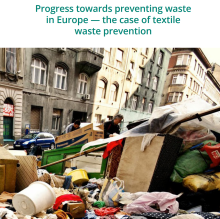
This report aims to assess progress towards the main objective of waste prevention: decoupling (i. e. breaking the link between waste generation and economic growth).