During its 152nd plenary session on 30 November and 1 December 2022, the European Committee of the Regions adopted an opinion on the EU Strategy for Sustainable and Circular Textiles. This is available in 23 European languages.
The opinion was drawn up by Luca Menesini (IT/PES), President of the Province of Lucca, Tuscany.
The innovation cluster Circular Saxony aims to re-design products and processes in line with circularity and sustainability, while lowering the costs of society's transformation towards climate neutrality.
It brings together industry, research and policy representatives in thematic working groups which will work on practical solutions within the region of Saxony.
Goals:
Foster collaboration across sectors and technologies among SMEs, large enterprises, research organisations, associations and policymakers in Saxony
Transfer knowledge
Facilitate projects for members
Set up pilot lines and digital networking technology
Increase quota of materials kept in the loop for all relevant materials
A new European Commission publication shows how buildings professionals can contribute to the New European Bauhaus movement for sustainable living, inclusiveness and aesthetics with help from Level(s), the EU framework for sustainable buildings.
The European Cluster Collaboration Platform (ECCP) is an online hub.
It aims to strengthen the competitiveness and sustainability of Europe’s industrial ecosystems, particularly SMEs, improving their performance in terms of productivity, innovation, internationalisation and resource efficiency through a variety of modern tools:
Events to foster capacity building and peer discussions
Matchmaking events
A knowledge database mapping regional, national, international and sectoral cluster networks, toolkits and publications
Partner search and exchange facilities to link up offer and demand
Support for international cooperation
Their Green Transition Support Hub, with a network of institutions offering support for resource and energy efficiency, addresses circularity.
This discussion on 12 December 2022 will explore how the circular economy can be an essential tool in helping us achieve our biodiversity and climate goals.
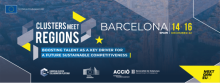
Within the framework of the "Clusters meet regions" site visits, a matchmaking event "Boosting talent as a key driver for a future sustainable competitiveness" and workshops will be organised on 14 - 16 December 2022. Their focus is on three key EU industrial ecosystems (Agrifood, Energy and mobility) where clusters play an active role in regional economies driving transition pathways towards sustainability through collaborations between clusters and regional stakeholders.
Buildings are important in EU environmental and climate policy for several reasons, including their greenhouse gas emissions and high consumption of material resources. Improved design and building techniques will produce highly efficient new buildings, but more than 85 % of today's buildings are likely to still be in use in 2050.
This briefing examines potential renovation activities that could improve the sustainability of existing buildings and the implications for embedded greenhouse gas emissions and resource use.
Establishing an EU circular economy calls for a transformation of Europe’s production/consumption systems. Production systems respond to and shape consumer demand through the products offered and how they are marketed. Informed consumer choices can potentially shape decisions made by producers upstream and downstream in product supply chains.
This briefing explores how policy can enable more circular economy-consistent consumer behaviour by understanding the factors influencing it.
The study aims at raising awareness among practitioners and policymakers of the concept of 'circular taxation' and of its potential to provide the incentives needed to step away from the wasteful linear economy and contribute to the shift to a circular economy which operates within planetary boundaries.
The report proposes a definition of circular taxation differentiating it from traditional approaches to environmental taxes.
Four case studies of environmental taxes are considered to establish if they have elements that would be expected of circular taxation, and to seek to learn lessons for the application of circular taxation.
Recommendations are presented on the implementation of circular taxation and on the possible uses of revenues with a focus on equity and just transition.
Attend the Horizon Europe-Cluster 6 Info Days on 13-14 December 2022 to get informed!
The Info Days will present the Research and Innovation topics of the Horizon Europe Cluster 6 (Food, Bioeconomy, Natural Resources, Agriculture and Environment) Work Programme 2023.