The Finnish Innovation Fund Sitra is collecting a selection of circular economy solutions that are among the most viable, promising, scalable and impactful in the world.
This research by Lukas Stumpf, part of the CEC4Europe factbook on the circular economy published in September 2018, evaluates 131 projects from the Circular Economy Industry Platform (CEIP) regarding their contribution to circular economy from both a scientific and a political perspective.
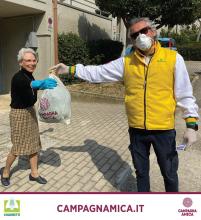
Copa-Cogeca is sharing the initiatives of its members that demonstrate the many actions taken by EU farmers and cooperatives to deal with the Covid-19 crisis.
This publication by WBCSD and Circle Economy highlights how the built environment, consuming almost half of the world's resources extracted every year and responsible for a massive environmental footprint, is a fundamental sector in the circular transition.
ProCirc – Circular Procurement: Accelerate circular economy through procurement power, alliance and capacity building – is a 3.5 year Interreg North Sea Region project that started in 2018, co-funded by the Regional Development Fund of the European Union. It is led by a consortium of 11 partners, including ACR+, representing both public authorities and research institutes.
In June 2019, Altstoff Recycling Austria (ARA) and Circle Economy released the Circularity Gap Report Austria, the first measure of circularity for a nation state.
On 1 September 2020, the 5th Circular Change Conference, held under the theme of “Mainstreaming the Circular Economy Mindset”, will set the trends for the discussion on sustainable leadership, business-led innovation and the EU’s sustainability goals based around the European Green Deal.
After three years of hard work, the URBANREC project has been brought to a successful completion. The main outcomes of the project include a comprehensive guide on bulky waste management, the implementation of demonstration activities on innovative practices for the re-use, collection and treatment of urban bulky waste, as well as knowledge transfer activities.
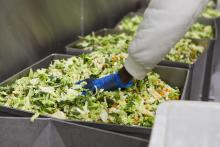
Jerónimo Martins, a food retailer operating in Colombia, Portugal and Poland, has implemented various measures to reduce the amount of food wasted in its operations and value chains, and promotes recycled and recyclable packaging.
Syctom is a French local public authority and a leading European operator in domestic waste management. It processes 2,3 million tonnes of domestic and related waste from around six million inhabitants of the Île-de-France region, including Paris, i.e. almost 9% of the French population.
In its position paper, Syctom highlights some elements in order to contribute to future discussions about the development of the new CEAP, in particular:
strengthening and extending ecodesign,
waste reduction,
stimulating the market for secondary raw materials,
waste-to-energy as a sustainable environmental activity and