The European Commission is planning to review the requirements on packaging and packaging waste in the EU. It is keen to have feedback from citizens and stakeholders on the subject, which will be taken into account when it comes to further developing and fine-tuning the initiative.
The report from TCO Development, the organization behind the global sustainability certification for IT products TCO Certified, explains how everyone who buys/uses IT products can implement circular practices. It sets out how circular economy (CE) helps solve many pressing sustainability challenges linked to IT products and contains 33 expert tips on circular IT management.
Key findings:
Use IT products longer.
Circularity helps maximize the value of IT investment.
Market demand is key to accelerating the pace of change.
Circularity includes IT management throughout the life cycle.
Improved supply chain responsibility can speed up transition to CE.
Circularity is a team effort.
Many circular solutions are already in place - just use them.
The European Policy Centre’s (EPC) Task Force called Digital Roadmap to Circular Economy has explored the linkages between digitalisation and circular economy, the opportunities created by data and digitally-enabled solutions, and the challenges associated with harnessing their full potential for the transition to a circular economy.
The project represents a pioneering endeavour in exploring the interconnections between the digital and green transformations and considers the implications for EU policymaking.
The final publication The circular economy: Going digital and its executive summary show that digitalisation can offer enormous possibilities for the transition to a more sustainable, circular economy but it is essential to steer it in the right direction.
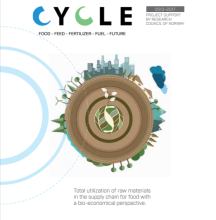
The CYCLE 2013-2017 interdisciplinary project, supported by the Research Council of Norway, focused on the food supply chain from both agriculture and marine sectors, with the aim to improve utilisation of raw materials in a bio-economical perspective.
Aragón Circular is an economic strategy that aims to boost the circular economy in the entire region of Aragon. Its objective is to create a political, economic, and social framework that will allow Aragon to move towards an innovative circular economy. Furthermore, this strategy will generate high-quality employment and provide the backbone for the territory.
BusinessEurope organised two events for businesses and policymakers on challenges and opportunities for scaling up circular economy solutions in Brno and Madrid in October 2018.
In its role developing scientific research and innovation in various fields, including the circular economy, IRCEM has organised several thematic workshops and conferences.
In March 2019, the Ellen MacArthur Foundation launched Circular Economy in Cities, a suite of easily accessible resources which provide a global reference on the topic.
At the beginning of June 2020 the Spanish Government published España Circular 2030, the new Strategy for Circular Economy in Spain until 2030. It contains circular economy objectives and a series of strategic orientations for the period 2020-2030.
The strategy:
sets up a series of objectives for 2020-2030 which will, inter alia, allow a 30% reduction in the national consumption of resources and a 15% reduction in waste generation (as compared to 2010);
contributes to Spain's efforts to transition to a sustainable, decarbonized, resource-efficient and competitive economy;
takes the form of successive three-year action plans providing for concrete measures to deliver on circular economy.