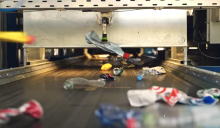
Multilayer packaging, often based on PET and polyolefins, presents significant challenges for recycling due to its complex structure. The EU Horizon project MERLIN has focused on developing cost-efficient and high-performance solutions for sorting, delaminating and recycling multilayer packaging materials.
As the project draws to an end, policymakers, waste management professionals, packaging manufacturers or researchers involved in plastic recycling and circular economy initiatives are invited to take stock of the project's findings.
This report is part of a larger, collaborative four-year research project. It analyses the fashion value chain from a global and local perspective with an emphasis on India, Spain and the Netherlands, using a novel framework to assess social impact for circular economy called the SIAF-CE.
The report concludes that the Dutch circular ambition in policy is high and a solid ecosystem is in place. The most established circular strategies are resale and recycling, while promising ones are resale-platform-based, rental and repair. However, the social impact of most circular strategies seems to emulate linear value chain working conditions, where women workers hold the most vulnerable jobs, with low pay, short-term contracts and lower collective bargaining.
Businesses in Spain and around the world are adopting the circular economy as a new production paradigm. However, while the economic and environmental dimensions of the circular economy have been explored, its social impact (decent pay, gender equality, labour conditions) has been overlooked.
By surveying more than 210 workers in three countries and interviewing 90 stakeholders in Spain, the authors developed an inventory of circular jobs. They found that circular jobs in Spain follow the same pattern as the linear value chain, where women in resale, repair and recycling are the most vulnerable. Startups in resale and rental based on internet platform models have the highest earning quality but also high job insecurity, especially for women workers.
This analysis report was prepared in connection with the EU-funded Wood2Wood project and explores opportunities to advance the circular economy and overcome challenges to waste wood utilisation through supportive policy.
It outlines recommendations and policy options for improving waste wood utilisation through harmonised multi-criteria waste wood classification, refined and extended targets and obligations, enabling policy and policy which fundamentally reflects the lifecycle perspective. These recommendations and policy options serve as a point of departure to help shape the regulatory environment in support of improved waste wood valorisation.
On 12 November, the European portal for energy efficiency and renewable energy in buildings BUILD UP is hosting the sixth and last webinar, part of a series of six webinars organised with the COST Action project on ‘Stakeholder Webinar Series – Deconstruction and Demolition Teams & Waste Management Industry’.
incommon is a non-profit organisation that encourages people to adopt the circular economy as a way of life. They use a bottom-up approach, working with individuals, schools, businesses, institutions, groups and local authorities.
Their approach ensures that people are informed about circular economy principles and engaged in implementing them, enabling them to make sustainable choices and drive local change.
Renewaball introduced the world’s first fully circular tennis and padel balls, designed with recycled materials sourced from used balls collected across European clubs.
This project embodies eco-friendly design by reusing rubber from old balls and using biodegradable wool felt to replace conventional polyester and nylon, which reduces microplastic pollution.
Businesses in India and around the world are adopting the circular economy as a new production paradigm. However, while the economic and environmental dimensions of the circular economy have been explored, its social impact (decent pay, gender equality, labour conditions) has been overlooked.
By surveying 100 workers and interviewing 40 managers in India, the authors developed an inventory of circular jobs with the respective demographic. They found that circular jobs in India are of low quality due to relatively low wage and job security indicators (especially for female workers). Informal migrant women in resale, repair and recycling are most vulnerable. Resale and rental based on internet platform models have the highest earning quality for men and women.
A tradition since 2019, the Business Council for Sustainable Development in Hungary (BCSDH) organises the Circular Economy Summit every November with the Dutch Embassy in Hungary. This year's conference will focus on the shift to a circular economy and international and domestic best practices.
ADVANCE Circular is an Erasmus+ project, focusing on linking the tourism industry with VET (Vocational Education and Training) to embrace circularity. The brochure describes the project which aims to assess the readiness of the tourism sector and VET institutions for adopting circular principles in Bulgaria, Romania, Slovenia and Spain.
"Are we ready for circularity?" is part of the second stage (Mapping the Scene & Creating Bridges). It finds that despite progress in raising awareness of circularity, significant efforts are needed to overcome financial, educational and regulatory barriers. Strengthening strategic partnerships, increasing funding support and enhancing training opportunities will be vital to advance circularity readiness in the tourism and VET sectors in these countries.