As DECOST (Decentralised Composting in Small Towns) project is coming to an end, Med4Waste which capitalises on the results of DECOST and other similar ones, organises an event to share these experiences on 2 March 2023.
This hybrid event (in Vic and online) is open to everybody. Waste management stakeholders interested in composting are welcome to join!
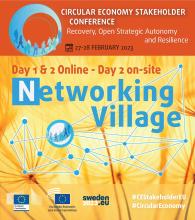
Welcome to the Networking Village of our 2023 Annual Conference, where Stakeholders have an opportunity to showcase their best projects, initiatives or business models relevant to the circular economy.
Holland Circular Hotspot is proud to announce the first webinar on circular lithium-ion batteries, organised together with the Embassy of the Kingdom of the Netherlands in the USA.
Join the event on Monday, 6 March 2023 to discover more about current trends, challenges and developments in this crucial value chain at both market and policy level. With expert speakers from government and business, the webinar will explore opportunities for collaboration between the two countries and engage with a broad audience across the public and private sectors. Don't miss the opportunity to learn more about this hot circular topic!
150 livestock family farms have joined a bio-economy plant project in Alcarràs, Catalonia, a region with many livestock farms and fruit plantations. The project aims to manage manure in a more sustainable and circular way.
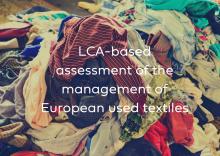
The quantities of used textiles collected in Europe are increasing, while the proportion of high-quality reusable garments is decreasing. Currently, around 50-75 % of the collected textiles is reused, whereas 10-30 % is recycled.
Towards 2030, however, it is expected that a smaller portion will be suitable for reuse, and that more will be fit for recycling. This is because the requirement of separately collected textiles is expected to divert textiles from mixed waste, which is not fit for reuse, as well as of a general trend of falling quality. The lifecycle impact assessment (LCA) of reuse compared to a new product confirms that the environmental impact of reuse is significantly lower than the production of a new garment.
On Day 2 of the European Circular Economy Stakeholder Annual Conference (28 February), a Networking Village will showcase a selection of good practices, initiatives and circular business models. Twenty online and ten on-site exhibitors will bring their work to an audience of around 500 participants. A unique opportunity to pitch projects and matchmaking opportunities. Interested?
The EU is facing increasingly serious societal, environmental and climate challenges. EuRIC is uniquely placed to bridge circularity and climate neutrality. However, regulations and policies are hindering the sector's ability to tackle these societal challenges in partnership with the EU.
Join EuRIC in Brussels on 30 March for a high-level conference that will unite European policymakers and recycling experts from across the circular economy value chain.
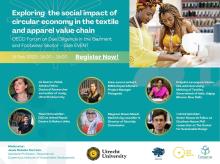
Circular economy take-up by companies in the textiles and apparel sector has increased significantly in recent years, but we know relatively little about how current circular business models affect workers and communities.
In this session on 14 February, Utrecht University's Copernicus Institute of Sustainable Development, Smart Green Industry and Conserve India will explore the outcomes of their most recent social impact study on the apparel value chain.
The ASEAN Circular Economy Stakeholder Platform (ASEAN CE Platform) is a regional facility helping Association of Southeast Asian Nations Member States achieve sustainable consumption and production by accelerating the transition to a circular economy.
The EU-ASEAN Strategic Partnership covers the circular economy, and the Platform is part of the EU-ASEAN Partnership on Circular Economy, endorsed by ASEAN Senior Officials on the Environment in 2018. The ASEAN CE Platform is hosted by the ASEAN Centre for Sustainable Development Studies and Dialogue at the College of Management, Mahidol University in Bangkok, Thailand.
The establishment of the Platform was inspired by the success of the European Circular Economy Stakeholder Platform in providing access to CE good practices and strategies.