Join this year's Nordic Circular Summit exploring the circular economy in the Nordic region on 23–26 November, and learn about the region’s tremendous circular opportunities.
The Circular Economy Hotspot Catalonia 2021 will take place in Barcelona. The 5th edition of the event aims to share circular economy strategies and experiences.
The celebration of this event strengthens the Circular Catalonia hub, a meeting point for companies, institutions, and people ready to put into practice solutions and strategies to consolidate the circular economy in Catalonia.
The Environmental change project promoted proactive reskilling and upskilling to reap the benefits of the ecological transition. The project was in line with the European Green Deal and focused on the circular economy and sustainable solutions.
Circular Threads aims to paint a picture of sustainability and circularity practices in the fashion and textile industry in Northern Italy.
This study is a starting point for fostering the transition towards circular production models in the Italian textile industry. Researchers have developed a tripartite approach (desk research, questionnaire and circularity assessment) with different levels of granularity to measure the sustainability and circularity of the companies present in this area.
The report highlights how few companies in the fashion and textile industry are adopting circular practices and strategies, and a clear lack of knowledge sharing about the potential opportunities that the circular economy can offer businesses on a systemic level.
The French National Institute for Circular Economy (INEC) has published this paper which aims to use schools - a place familiar to all - as showcases for the circular economy. It contains a series of good practices (for public and private actors, youth) comprising over 40 territorial initiatives and 50 operational solutions, on the following themes:
school buildings (construction, renovation)
energy supply
inner/outer spatial planning
stationery-equipment-furniture
school cleaning (products and apparel, staff training)
food loop (local and sustainable food, waste, water fountains)
The circular economy is a key element of the European Green Deal as a concept that can support the transition towards a more sustainable growth model. In recent years there has been a growth of circular economy industrial applications, but evidence suggests that the uptake of circular approaches in many sectors is still limited.
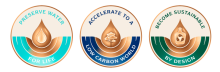
Reduce water use in Diageo's operations with a 40% improvement in water use efficiency in water stressed areas and 30% improvement across the company.
Other (Sustainable management of water)
To be achieved by:
Replenish more water than Diageo uses for their operations for all their sites in water-stressed areas by 2026.
Other (Sustainable management of water)
To be achieved by:
Invest in 150 projects to improve access to clean water, sanitation, and hygiene (WASH) in communities near Diageo sites and local sourcing areas in all of Diageo's water-stressed markets.
Other (Sustainable management of water)
Start Date:
Engage in collective action in all of their Priority Water Basins to improve water accessibility, availability and quality and contribute to a net positive water impact.
Recycling (also including specific waste streams)
To be achieved by:
Achieve zero waste in Diageo's direct operations and zero waste to landfill in Diageo's supply chain.
Recycled materials as part of raw materials demand (recycled content)
To be achieved by:
Ensure 100% of Diageo's packaging is widely recyclable (or reusable/compostable).
Recycled materials as part of raw materials demand (recycled content)
To be achieved by:
Continue to reduce packaging and increase recycled content in Diageo's packaging (delivering a 10% reduction in packaging weight + increasing the % recycled content of the packaging to 60%).
Recycled materials as part of raw materials demand (recycled content)
To be achieved by:
Ensure 100% of Diageo's plastics are designed to be widely recyclable (or reusable/compostable) by 2025 and achieve 40% recycled content in Diageo's plastic bottles by 2025, and 100% by 2030.
Other (Sustainable agriculture management)
To be achieved by:
Provide all of Diageo's local sourcing communities with agricultural skills and resources, building economic and environmental resilience (supporting 150,000 smallholder farmers).
Other (Sustainable agriculture management)
To be achieved by:
Develop regenerative agriculture pilot programmes in 5 key sourcing landscapes.
Other (Accelerate to a low carbon world)
To be achieved by:
Become Net Zero carbon in Diageo's direct operations.
Other (Accelerate to a low carbon world)
To be achieved by:
Reduce Diageo's value chain carbon emissions by 50%.
Other (Accelerate to a low carbon world)
To be achieved by:
Use 100% renewable electricity across all of Diageo's direct operations.