Recycling is key for the circular economy. Chemical recycling could one day become a trouble-shooter solution for any remaining unrecyclable applications and replace incineration. However, it is not yet a sustainable technology.
Ecopreneur.eu - the European Sustainable Business Federation - has concerns about linear economy lock-ins, high CO2 emissions, competition with mechanical recycling, lack of scale, low quality, toxic residues and large investments being drawn away from SMEs going circular.
Therefore it advocates supporting the development of chemical recyclingonly if it is:
net-carbon positive,
used for otherwise unrecyclable residues,
with maximum quality,
scalable,
at costs reflecting the waste hierarchy, and
matched by equal support for SMEs on circular design.
The authors of the study apply ascendency analysis (a systematic method based on information theory for quantifying the efficiency and resilience of natural ecosystems) at EU level and discuss the implications for urban waste management systems, taking the Netherlands as an example.
They argue that ecological principles can be useful for developing human-made systems. The system is made sufficiently robust to be able to cope with shocks by including a diverse set of stakeholders who provide:
resource-use efficiency through specialised know-how in capturing, processing and delivering a range of resources, and
resilience by generating multiple paths that allow these vital resources to circulate throughout the urban network at different levels and rates.
In Limbo is a platform (digital website and physical warehouse) facilitating the reuse of materials within thesocial and cultural sectors and schools in Brussels.
It encourages exchange and mutual aid within these sectors, as well as boosting recycling, reducing landfill costs and enabling organisations with limited resources to obtain reusable materials. Following the principles of circularity and sharing, all partners are invited to give and receive materials for free.
In Limbo is open only to registered partners which must be formal or informal non-profit associations or collectives, specifically social, cultural and artistic organisations, schools and temporary projects in Brussels. However, In Limbo accepts donations from all types of organisations.
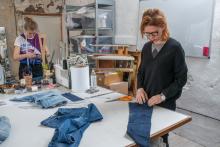
The mission of Reet Aus is to minimise the ecological footprint of one of the world's most contaminating businesses – the fashion industry. They do it by industrial upcycling. This not-wasteful way of production is based on a scientific methodology called UPMADE® that has been developed by the designer and founder PhD Reet Aus in cooperation with Stockholm Environment Institute Tallinn Center.
The initiative called Microplastics pollution – measures to reduce its impact on the environment aims to tackle microplastics unintentionally released into the environment. It will focus on labelling, standardisation, certification and regulatory measures for the main sources of these plastics.
The European Commission would like to hear your views on microplastics pollution. Give your feedback!
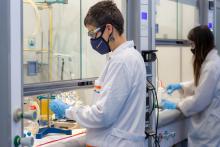
The EROS Project, with the participation of AIMPLAS and ITC, is working to develop new recycling processes to recover composite materials from the aeronautics and wind turbine sectors to manufacture new products for the transport and ceramics industries.