Recycling Albania was set up in 2022, based on the zero waste hierarchy. It aims to transform Albania’s waste sector into a model for sustainable resource management and lead the way in circular economy solutions in the Western Balkans.
It's setting up a Circular Economy Park, with a Multifunctional Education Centre, Recycling Yard and Second-Hand Store. The environmental, economic and social dimensions of the circular economy are covered!
Re:inventex is carrying out a project for the recycling of post-industrial and pre-consumer textile waste. It is essentially the first pilot project in Ukraine to create a modern infrastructure for the collection, sorting and recycling of textile waste.
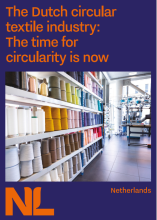
This publication featuring Holland Circular Hotspot shows the state of play and potential of circularity within the textile value chain in the Netherlands and beyond.
It aims to engage international dialogue on accelerating the transition to a fully circular textile economy, with policymakers, researchers, entrepreneurs, consumers and investors.
The challenges of achieving sustainability and circularity in textiles are complex and interconnected, from reducing environmental impact to improving labour conditions. This underscores the importance of international and multi-stakeholder collaboration to drive innovation, scale up sustainable practices and create a thriving circular textile industry.
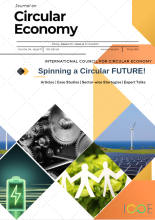
The Journal on Circular Economy is an initiative by the International Council for Circular Economy (ICCE). The journal explores various dimensions of the circular economy, including policy frameworks that support sustainable practices, research initiatives that drive innovation, and collaborative efforts that foster knowledge sharing among stakeholders.
The January 2025 edition features an article by Freek van Eijk from Holland Circular Hotspot, one of the ECESP Coordination Group co-chairs. The article focuses on the Netherlands: embracing circular economy as a business opportunity and a necessity. It looks at the origin and future of circular economy developments there and what lessons might be learned for India.
The Western Balkans need to boost their capacity to implement circular economy concepts and practices that go beyond waste management. The CSCP, VITO and the European Environment Agency accordingly launched the Capacity Building on Circular Economy in the Western Balkans project.
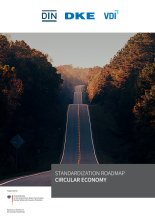
This Standardization Roadmap aims to provide an overview of the status quo of standardization in the field of the circular economy, to describe the requirements and challenges for seven key topics, and to identify possible needs for future standards and specifications.
This publication contains the results of over 74 projects completed as part of the Circular Ecoinnovation Programme between 2017 and 2023. The programme, managed by Ihobe, the environmental management agency of the Basque Government’s Ministry for Economic Development, Sustainability and the Environment, drives ecodesign, circular economy demonstration and strategic ecoinnovation in Basque companies.
The market, commercial, economic, technical or environmental feasibility of each project has been graphically included in each datasheet.
See also the website listing all the Basque Country's circular solutions to date.
The Extended Producer Responsibility Alliance (EXPRA)was founded in 2013 to promote effective and efficient EPR systems and sustainable packaging. It has produced a study outlining the core principles and practices of EPR, which are crucial for shaping and supporting effective EPR policies across Europe and worldwide.
Petshka is an R&D company based in France. It has devised a process for turning polyester waste into recycled polyol polyester, thus avoiding a huge amount of waste and emissions and reducing reliance on fossil fuel-based raw materials.
The network properties of the global waste trade were assessed using time series data of material and monetary flows between 2000 and 2022 from Chatham House's experimental database. The study focused on the distribution of monetary and material flows, policy recommendations and future research avenues useful for obtaining a more comprehensive understanding of socio-economic systems such as trade networks.
This work is a solid example of the application of network-based methods as an eco-mimicry approach for assessing the sustainability and fragility of socio-economic systems which can be helpful for researchers and policy makers interested in transitions towards regenerative circular economies.