This Sitra memorandum focuses on providing building blocks to help the next European Commission address the ecological crisis while maintaining Europe's competitiveness and resilience.
The renewed European Commission will take office in 2024 and must keep up the European Green Deal, ensuring that it centres on nature and mainstreams the circular economy across the EU single market.
The key recommendations include:
ecosystem accounting
biodiversity offsets
circular single market
leveraging nature as a business opportunity
using data for the green transition
addressing Europe's global biodiversity footprint, and
reforming the common agricultural policy.
Stakeholders are encouraged to contribute to the ongoing debate, ensuring the strategy's success.
The Circular Economy Resource Information System (CE-RISE) is an EU-funded project aiming to optimise raw material reuse and recovery in electronic products.
CE-RISE seeks to create an information system and integrate digital product passports. It will provide stakeholders with a better understanding of the green credentials of electronic products.
The FutuRaM project aimed to extend the knowledge base on critical raw materials in Europe and to develop tools to expand the infrastructure for recovering them as secondary raw materials.
Accordingly, it developed the Urban Mine Platform, which focuses particularly on critical raw materials.
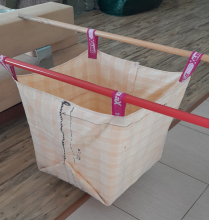
The Albanian social enterprise RecycAl reuses textile waste such as leather or canvas by turning it into heavy-duty bags that could be produced at industrial scale.
The Corporate Sustainability Reporting Directive (CSRD) will require EU business to report on several new sustainability topics, including their circular economy performance. However, only 2% of businesses currently comply with the disclosure requirements on resource use and the circular economy. Is your organisation ready?
Gravity Wave is a social start-up based in Spain. It focuses on working with small-scale fishermen to collect as much as possible of the plastic waste fouling the Mediterranean, from water bottles to a whole load of discarded fishing nets.
The MixMatters project aims to optimise the value derived from mixed biological waste. It will introduce a groundbreaking, integrated and adaptable solution for efficiently harnessing the potential of mixed bio-waste.
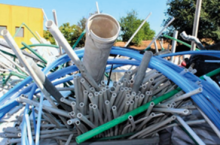
The "Waste REcycling Project" (WREP) is a pilot scheme developed by PVC Forum Italia, the national association of producers, converters and recyclers of PVC (polyvinyl chloride), in collaboration with VinylPlus, the European PVC value chain association.
It aims to make the collection, sorting and recycling of PVC waste from demolition/renovation, bulky waste and waste management centres more efficient, using a consolidated and accredited traceability methodology.
The Circular Economy Lab was set up in 2018 by Cariplo Factoryand Intesa Sanpaolo Innovation Center. It is a hub of circular economy competences that aims to help spread the principles and methods of the circular economy and support companies as they go circular.
The Lab is involved in various projects, such as the Iren Startup Award Call4Circular | Circular products and materials. It promotes the circular economy by holding workshops on key topics and by creating networking opportunities for innovative ecosystem players, such as startups, innovative SMEs, universities, research centres and technology transfer centres.
Wood is becoming increasingly important: it is key to energy, construction and decarbonisation, as well as raw material security. In addition, a raft of legislative and non-legislative measures are being prepared by the Czech Republic and the EU on the issue of wood processing and forestry.
Analysising the sector is therefore paramount. After eight months of work, the research team (Think Tank) of the Institute of Circular Economy has published a study on Closing the Loop on Wood: Circular Bioeconomy Opportunities in the Value Chain for Forest Products and Wood in Czechia. It explores the material flow of wood in the Czech Republic and the challenges, weaknesses and opportunities for cross-sectoral use.