Re:inventex is carrying out a project for the recycling of post-industrial and pre-consumer textile waste. It is essentially the first pilot project in Ukraine to create a modern infrastructure for the collection, sorting and recycling of textile waste.
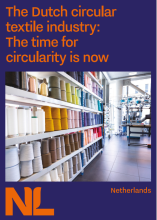
This publication featuring Holland Circular Hotspot shows the state of play and potential of circularity within the textile value chain in the Netherlands and beyond.
It aims to engage international dialogue on accelerating the transition to a fully circular textile economy, with policymakers, researchers, entrepreneurs, consumers and investors.
The challenges of achieving sustainability and circularity in textiles are complex and interconnected, from reducing environmental impact to improving labour conditions. This underscores the importance of international and multi-stakeholder collaboration to drive innovation, scale up sustainable practices and create a thriving circular textile industry.
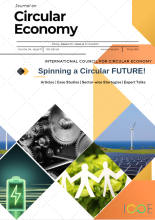
The Journal on Circular Economy is an initiative by the International Council for Circular Economy (ICCE). The journal explores various dimensions of the circular economy, including policy frameworks that support sustainable practices, research initiatives that drive innovation, and collaborative efforts that foster knowledge sharing among stakeholders.
The January 2025 edition features an article by Freek van Eijk from Holland Circular Hotspot, one of the ECESP Coordination Group co-chairs. The article focuses on the Netherlands: embracing circular economy as a business opportunity and a necessity. It looks at the origin and future of circular economy developments there and what lessons might be learned for India.
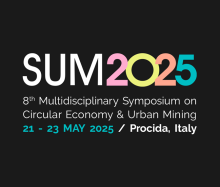
SUM 2025 aims to promote more continuous interaction and collaboration across fields, encouraging sustained, multidisciplinary dialogue and strategic partnerships.
This conference aims to provide an inspiring platform to explore cutting-edge microbial solutions addressing global challenges in health, industry, the environment and the transition to a circular economy.
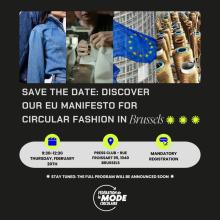
The Fédération de la Mode Circulaire (Circular Fashion Federation) is organising an event which will mark a milestone in their journey towards sustainable fashion: the release of their EU Manifesto for Circular Fashion. This manifesto outlines a policy roadmap for the European Union to leverage circular fashion as a means to bolster its textile industry, promote fair competition and champion environmental and human rights standards.
The Western Balkans need to boost their capacity to implement circular economy concepts and practices that go beyond waste management. The CSCP, VITO and the European Environment Agency accordingly launched the Capacity Building on Circular Economy in the Western Balkans project.