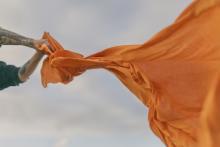
Infinited Fiber has developed a technology that can turn cotton rich textile waste into new fibres for the textile industry. Not just once, but infinitely. These new Infinna™ textile fibres can be recycled again and again without decreasing the quality of the fibre.
300 billion cigarette stubs are casually chucked away every year. Given that a single stub can pollute up to 500 litres of water, that is quite the environmental problem.
MéGO! offers a pragmatic solution with a service for collecting, sorting and recycling cigarette stubs.
The ECOALF Foundation's Upcycling the Oceans project is an unprecedented worldwide adventure that has already removed over 1700 tonnes of plastic waste from the bottom of the oceans with the support of over 4000 fishermen.
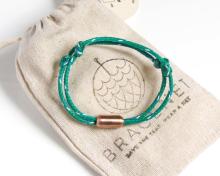
Bracenet collects discarded fishing nets, has them upcycled into fabric and then produces unique Bracenets, dog leashes, keychains, and rings in workshops that provide employment opportunities to disabled persons.
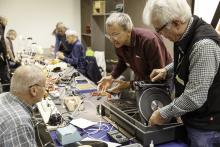
Munich has taken its ambitious waste reduction strategy to the next level by developing an innovative reuse lab and shop concept. Its Halle 2 municipal secondhand store not only enables people to take responsibility for living more sustainably, it also provides opportunities for job creation, educational programmes and voluntary activities.
On the 24th of May, C&A Foundation, together with Ecopreneur.EU hosted a Circular Fashion Policy Lab in Brussels at the European Economic and Social Committee in the context of the Circular Economy Stakeholder Platform. The purpose of the event was to bring together representatives from across the fashion industry to discuss key policy measures to make a meaningful impact for a green economy.
The PAPERCHAIN project aimed to deploy five novel circular economy models centred around making use of the waste streams generated by the Pulp and Paper Industry (PPI).