The Urban Agenda Partnership on Circular Economy has identified several barriers and bottlenecks regarding the use of secondary raw materials (recycling) or products (re-use) originating from waste streams and has now commissioned a basic assessment of the current legislative framework, the implementation and application of that framework, and the definitions of waste in the context of a circular economy.
Are you an urban waste manager or regulator? Share your experiences and best practice to provide valuable feedback on implementing waste legislation and contribute to recommendations seeking to improve this framework.
This publication, managed and delivered by C40 Cities, provides 40 thorough examples of practical circular economic initiatives from cities around the world, for inspiration and replications by other cities.
The Climate-KIC Circular Cities project is investigating how city governments can be transformational change agents and creators of smart and sustainable neighbourhoods.
The results are expected to improve how cities manage building, construction and utility waste and, through productively utilizing household and industrial waste streams, can increase the growing perception that what was once viewed as waste can now be viewed as resource streams.
Circle Economy has recently published a report entitled The Role of Municipal Policy in the Circular Economy: Investment, Jobs and Social Capital in Circular Cities, which summarises the results of a study in collaboration with the Erasmus Happiness Economics Research Organisation and the support of the Goldschmeding Foundation. The report explores the link between municipalities pursuing circular economy policy and investments in circular business for job creation. It also examines more closely how businesses perceive municipal support for the circular economy.
The report provides an overview of the estimated gross employment effects of municipal circular economy policy; it shows how municipalities can use a range of regulatory, economic and soft instruments for that purpose.
These factsheets outline circular economy opportunities to design out urban waste and pollution, ensure products and materials maintain their value, and regenerate the natural systems in our cities.
Easy-to-reference, the factsheets are a collation of research and case examples that answer some of the most prevalent questions around what circular economy can bring to cities:
Why is change in cities needed?
What circular economy opportunities address key urban system issues?
What can urban policymakers do to harness circular economy opportunities?
What are the potential economic, social, and environmental benefits of these opportunities?
These factsheets outline circular economy opportunities to design out urban waste and pollution, ensure products and materials maintain their value, and regenerate the natural systems in our cities.
Easy-to-reference, the factsheets are a collation of research and case examples that answer some of the most prevalent questions around what circular economy can bring to cities:
Why is change in cities needed?
What circular economy opportunities address key urban system issues?
What can urban policymakers do to harness circular economy opportunities?
What are the potential economic, social, and environmental benefits of these opportunities?
These factsheets outline circular economy opportunities to design out urban waste and pollution, ensure products and materials maintain their value, and regenerate the natural systems in our cities.
Easy-to-reference, the factsheets are a collation of research and case examples that answer some of the most prevalent questions around what circular economy can bring to cities:
Why is change in cities needed?
What circular economy opportunities address key urban system issues?
What can urban policymakers do to harness circular economy opportunities?
What are the potential economic, social, and environmental benefits of these opportunities?
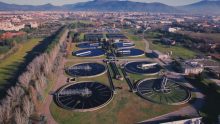
GIDA is a wastewater treatment plant that helps meet the needs of the local textile industry by supplying water of sufficiently high quality, while keeping water consumption to a minimum.
Explore how city governments around the world are taking action to enable circular economy opportunities that deliver on a range of mayoral priorities, Sustainable Development Goals, and climate objectives. The EMF has launched Circular Economy in Cities with a global reference on the topic.
Vision: What will the implementation of circular economy principles in cities look like?
Factsheets: What benefits can a circular economy transition in key urban systems bring to cities?
Policy levers: What can urban policymakers do to accelerate this transition?
Case studies: What examples are there of urban policymakers already putting this into action?
Other networks & resources: What are other organisations doing on the topic of circular economy and cities?
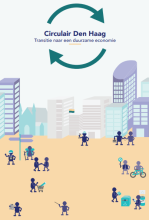
In this policy note, the City of the Hague outlines why a circular transition is necessary and what benefits it can provide to the city for its sustainable development. Continuing with a state-of-play, the note sketches out the policy framework at European, national and regional level to provide strategic context and introduce analysis of a non-exhaustive list of 143 ongoing circular projects in The Hague area.
Links to further research show that using the opportunities a circular economy provides in the Construction, Procurement and Retail Trade sectors alone could substantially reduce carbon emissions and deliver 3,500 jobs in city's area.
Building on this research, the policy note indicates the city's priorities best lie in biomass, construction material and critical raw materials.
After the 2014 elections, the new Roubaix municipality team wanted to change the image of its city and encourage a positive attitude towards both its inhabitants and France as a whole.
The roadmap aims at turning difficulties into advantages, generating a new dynamic. Based on theSustainable development strategy (since 2003), a zero waste policy is progressively implemented with a focus on cooperation and awareness raising among stakeholders.
The approach is global, even if some activities are implemented on a micro-scale (budget issue), mostly at the level of a city sub-district (Fresnoy-Mackellerie).
To enable the entire City of Roubaix to experience the transition to a zero waste economy, projects are open and accessible to all categories of population and businesses.