Cities can play a pivotal role in creating an enabling environment through regulations and incentives, but the private sector needs to collaborate and explore the cross-sectoral synergies required to achieve a circular model. There are immense opportunities for public-private collaboration in achieving goals that might not otherwise be possible for cities to accomplish alone.
Cities are embedding circular thinking in their utility processes, placing the onus on the private sector to come up with new business models that are both economically viable and ecologically sustainable. This could potentially result in a situation whereby circular products and services become the new market standard.
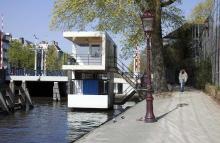
The BlueCity business park is one of Rotterdam's unique landmarks: formerly a water park resort, the complex is now a circular incubator housing over 30 startups experimenting towards a sustainable future.
The Prague Circular Hub is a joint initiative by the Institut Cirkulární Ekonomiky, the Alliance for Renewable Energy and the Brno Centre for Entrepreneurship and Innovation. Its vision is to build a cultural and innovation centre which seeks to familiarise the general and professional public with the circular economy.
With discussions, seminars, conferences and pilot projects testing new research methods in the field of the circular economy, the Hub promotes the shift to a circular system.
The Hub has completed a Prague Circular Scan with the support of Circle Economy, and now it continues to organise regular ‘buzz talks’ and conduct research to promote the adoption of circular business models in the Czech capital.
Are you active in the collaborative (sharing) and circular economy? Fill in the Collaborative X Circularsurveyto share your knowledge and support an EU-wide mapping exercise.
ACR+ has made substantial contributions to developing monitoring systems with corresponding indicator sets for urban and regional authorities. Among others, ACR+ has continued its Circular Europe Network projects within the Urban Agenda Partnership on Circular Economy, while also contributing to the CIRCTER final report on sub-national circular economy monitoring.
ACR+ has consistently advocated to accelerate the circular economy, while also showcasing urban best practice in circular economy throughout 2019 at various events across the European continent.
Circular Oslo promotes multi-stakeholder collaboration to accelerate the circular transition in the Oslo Region.
It does so by sharing knowledge and expertise for reduced material consumption, while supporting regional activities with a positive social, economic and environmental impact.
Circular Oslo:
inspires by identifying and highlighting municipalities, organisations, projects and initiatives that implement circular solutions and innovative business models
develops and provides access to tools, workshops and educational resources for public entities, communities, NGOs, businesses, entrepreneurs and students to better understand and implement circular solutions
collaborates with similar initiatives whose values and mission align
Circular Economy Transition is a pioneer initiative that aims to accelerate Switzerland's transition a circular economy. It currently takes place in five Swiss cities: Basel, Bern, Geneva, Lausanne and Zurich.
In close collaboration with Impact Hub Switzerland, sanu durabilitas and with the support of the MAVA foundation, this initiative will contribute to drive the new paradigm for the future of business, policy making and society.
Local government programmes that encourage and support circular economy practices, such as repair, recycling and circular design activities help attract new investment, create jobs and result in tangible socio-economic benefits for the city and its people, reveals the report: The Role of Municipal Policy in the Circular Economy: Investment, Jobs and Social Capital in Circular Cities.
The report explores the connection between municipalities pursuing circular economy policy and investments in circular business that create jobs. In order to maximise circularity's benefits for society, municipalities can employ a series of regulatory, economic and soft instruments that include strategies, targets, loans and subsidies, which are all also conducive to generating employment.