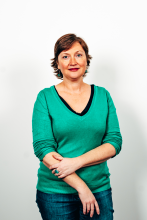
Coordination Group 2023-2025

  • Agata Meysner
    Type of organisation or company
    Country
    Belgium
    EU
    About this contact

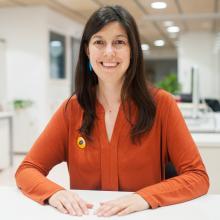
    Agata Meysner is a youth activist and the director of Generation Climate Europe (GCE). She holds an LLB in European Law from Maastricht University and is currently pursuing an MSc in Public Policy from University College London specialising in the circular economy and resource efficiency. Ms Meysner previously worked at the European Environmental Bureau, where she focused on the implementation of the SDGs by and in the EU.

    Generation Climate Europe is the largest coalition of youth-led networks at the European level, pushing for stronger action from the EU on climate and environmental issues. GCE brings together 460 national organisations across 47 countries in Europe. It is guided by the voices of 20 million young Europeans. GCE's mission is to create a platform for the youth to advocate for a just and green transition in Europe. 

    The circular economy is one of the key thematic areas for GCE, encompassing various issues such as textiles, digitalisation, energy and food systems.


  • Nick Dornheim
    Type of organisation or company
    Country
    Belgium
    About this contact

    EuroCommerce is the principal European organisation representing the retail and wholesale sector. It embraces national associations in 31 countries and 5.4 million companies, both leading global players such as Carrefour, Ikea, Metro and Tesco, and many small businesses. Retail and wholesale provide a link between producers and 500 million European consumers over a billion times a day. It generates 1 in 7 jobs, providing a varied career for 29 million Europeans, many of them young people. It also supports millions of further jobs throughout the supply chain, from small local suppliers to international businesses. EuroCommerce is the recognised European social partner for the retail and wholesale sector.

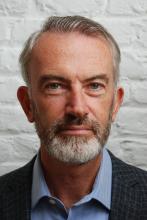
    Nick Dornheim is advisor for Environment & Sustainability at EuroCommerce. He focuses on promoting retailers' and wholesalers' circular economy initiatives such as deploying more sustainable products, ensuring the right waste management infrastructure and empowering consumers.

  • About this contact

    Mercè Boy Roura is a senior researcher and EU project coordinator at the Governance for Sustainability Unit at the BETA Technological Center, based at the University of Vic – Central University of Catalonia (Spain). She is an environmental scientist with a PhD in Experimental Sciences and Sustainability. She has more than 10 years of international experience in research and knowledge transfer projects in the field of sustainability and circular economy, and in particular focusing on the agri-food systems.

    She is currently coordinating the Innovative Sustainable Economy (ISE) Mission of the Interreg Euro-MED programme, enhancing the legacy of the previous Interreg MED Green Growth community. The current ISE mission has a broader scope embracing innovation capacities – technological, social, institutional – and practices conducive to more sustainable production and consumption in the region, in line with the European Green Deal and European Cohesion Policy priorities and specific objectives. The ISE Mission is a multi-stakeholder network of projects connecting 155 partners from 18 countries in the Mediterranean region, with a well representation of the 4-ple helix stakeholders. It structures its work around four focus areas: Marine resources, Agri-food systems, Industrial Transition, and Resource Valorisation. Also, it supports projects by increasing their impact at policy level and fostering potential transfer and replication of their results in other regions and by other stakeholders. The ISE Mission is labelled by the Union for the Mediterranean (UfM), acknowledging its potential to advance cooperation in the transition to a green and circular economy in the Mediterranean region.

  • About this contact

    The Conseil Européen de Remanufacture (European Remanufacturing Council) is based in Brussels and represents multiple business sectors and trade associations that extend the life of products through remanufacture and refurbishment. A steering group made up of five member organisations advises on the annual work programme as we aim to increase sales of remanufactured products in Europe from €30 billion to €100 billion by 2030.

    David Fitzsimons became Director of the European Remanufacturing Council in January 2017. He represents the Council at the Ellen MacArthur Foundation, with whom he led the “BetterThanNew” project. He is currently a member of the UN working group on product life extension; a member of TC 323 for the forthcoming ISO standard (59000 series) for the circular economy; a member of the advising committee for the PLATE conference, and a member of the World Economic Forum Council for advanced manufacturing and production.

    He founded the circular economy consulting firm Oakdene Hollins in 1994 and is now director of the management board.

  • Recycling Europe (formerly EuRIC) represents the recycling industry at European level and is the leading voice for a competitive European recycling industry, enabling the circular economy and preserving resources for future generations. 
    It:

    • advocates for conditions that enable recycling and waste management sectors to be competitive, grow and re-invest;
    • connects the European recycling industries and other circular economy stakeholders;
    • acts as a trusted partner between the European recycling value chain and policy makers;
    • Advances the socio-economic, climate and environmental benefits of recycling;
    • provides specific and cross-sectoral expertise on a broad range of materials, including:
      • Metals
      • Plastics
      • Paper
      • Textiles
      • Tyres
      • End-of-life vehicles
      • E-waste, including batteries
  • Cities and entrepreneurs are expected to be full of inspiring and sustainable ideas but they often have a lot of questions before they can implement those ideas. How do you set up a product-as-a-service business model? How do I protect my logo? How can you support cititzens' initiatives? How can the financiers be involved...

    To get an answer to all these and other questions, you can ask experts at CircleAid, a network of experts and mentors to help you kick-start your circular initiative. They have specific experience of the circular economy: business models, procurement, governance, financing...

    These experts are mentors who can guide you through your circular questions. Consultants who want to become part of this database can apply if they have experience or knowledge of the circular econo

  • Vlaanderen Circulair is the hub and inspiration for the Flemish circular economy. It is a partnership of policy makers, companies, civil society and the knowledge community taking action together. Its six core activities are:

    • Bringing together partners to tackle circular economy challenges
    • Creating knowledge to streamline policy-related research into policy measures for the circular economy in Flanders
    • Speeding up innovation and entrepreneurship
    • Assisting pioneers
    • Connecting local, Flemish, federal and European policy making
    • Embedding circular principles across Flemish civil society.


  • The Circular Economy Academy is a free mentoring and support programme, set up by the Rediscovery Centre, which is the National Centre for the Circular Economy in Ireland. The programme assists social enterprises and community organisations in Ireland to move their activities towards sustainability and embrace the circular economy.

    The aim of the Circular Economy Academy is to facilitate Ireland’s transition to the circular economy through demonstration, education and collaboration. The support provided is based on the Rediscovery Centre’s vast knowledge of social enterprise development and design thinking concepts, from advice for start ups to business planning, funding, diversification, training and more.

    Each service is tailor-made to suit the needs of the participating organisation.

  • Arthur ten Wolde
    Type of organisation or company
    Country
    Belgium
    Netherlands
    About this contact

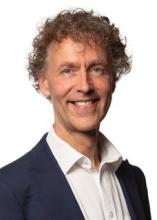
    Arthur ten Wolde is the Executive Director of Ecopreneur.eu, the European Sustainable Business Federation. Ecopreneur represents about 3000 businesses in five Member States, mostly SMEs, which strive to deliver sustainable products and services. Arthur is internationally recognised as a circular economy expert, motivational speaker and (co-)author of several reports and many articles in magazines.

    In addition, he is Trainer on Circular Design for CIRCO and Head and Owner of Circular Future. Arthur worked earlier for De Groene Zaak, IMSA and the Dutch Industry Confederation VNO-NCW. 

  • Veerle Labeeuw
    Type of organisation or company
    Country
    Belgium
    About this contact

    Veerle works as a policy maker and facilitator for the public/private partnership Circular Flanders, which was initiated by the public waste agency of Flanders (OVAM). It serves as a hub, inspiration and matchmaker for the transition to a circular economy in Flanders.

    To move forward, six thematic strategic agendas have been identified:

    1. circular construction
    2. chemicals and plastics
    3. water cycles
    4. biobased economy
    5. food chain, and
    6. manufacturing (textiles, furniture, electronics, batteries, etc.).

    Each strategic agenda is a partnership in itself and is assigned a public and a private lead.

    Drawing up and implementing strategic agendas, however, doesn’t guarantee success. To make the transition to the circular economy a reality, there is a whole series of habits, rules and barriers inherent in the linear economy that need to be tackled. What’s more, communication, funding and robust scientific research are also required. The strategic agendas are therefore accompanied by seven levers: financing, communication, research, jobs and skills, circular procurement, innovation and entrepreneurship, and policy instruments.