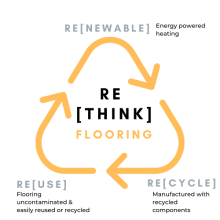
IOBAC avoids adhesive and attaches its flooring materials partly by means of magnets. Its Dual-Grip technology affixes flooring using both magnetism and tack. This means that tiles can be taken up and reused, keeping the components in the value chain, or recycled. The technology is manufactured using plant-based VOC-free resins, recycled rubber tyres and additives from scrap iron.
In this webinar on 6 October 2022, the project partners will share their knowledge, experiences and insights regarding design and product development with recycled plastic.
The webinar will be chaired by Prof. David Greenfield (SOENECS), joined by representatives from project partners Technische Universiteit Delft (NL), Manchester Metropolitan University (UK) and the Green Plastic Factory (NL).
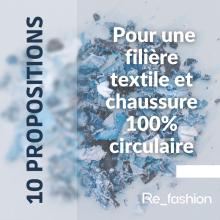
The textile industry’s figures are clear: of the 648 000 tons of textiles placed on the market each year in France, only 38% are collected for recycling.
The 10 proposals set out in this white paper (in French) seek to meet three objectives. The first consists of building the Extended Producer Responsibility approach around environmental benefits. The second is to support the development of a sustainable textile and footwear recycling industry. The last is to meet the legitimate expectations of transparency and traceability. The proposals aim to achieve these objectives in the context of the three key steps in a product’s lifecycle: (1) fabrication, (2) consumption, and (3) regeneration.
The students' call for Circular Economy Innovative Projects (Navarra Circular Economy Awards 2022) is open until 25 September 2022. It is geared to the textile and plastics sectors as well as food industries. The call seeks to identify vocational education and training final projects, final degree projects, Master's final projects, PhD theses or similar developed by students.
The European Commission is launching a survey to collect data on food loss and waste prevention initiatives along the food supply chain.
This survey aims to collect relevant information by 3 October 2022 on both ongoing and concluded food waste prevention initiatives in order to analyse their efficiency, effectiveness, and impacts.
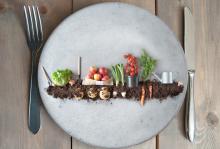
By using residual streams, we can take a big step towards a circular, sustainable food system. This shift does require cooperation, however...
Foodvalley aims to promote the shift to a sustainable global food system. One of its projects is the Upcycling Community: an international group of partners collaborating on upcycling food losses. There are still many barriers to this circular approach, however, so they are focusing on:
bringing together a diverse and impactful group of business partners with a shared interest in upcycling food losses;
encouraging purchasers and product developers to replace virgin ingredients;