In 2017 JRK Waste management introduced an intelligent data system (ECONIT) to reduce the high quantities of mixed municipal waste in Czechia. The programme asks residents to scan their rubbish with QR codes. Information on the quantity and types of waste produced is then used by the local waste management agencies to improve collection and recycling rates.
ACR+ is launching a publication on the development and implementation of circular bioeconomy strategies in different contexts, focusing on three detailed regional case studies in Navarre, Bayern and Flanders.
Under a cooperation agreement with the French Pays de la Loire region, ACR+ has set up a working group on the circular bioeconomy, with a focus on governance. The working group aims to support the development of local and regional roadmaps for the circular bioeconomy, as public authorities steer and support the development of the circular bioeconomy on their patch.
The publication is the result of activities implemented by ACR+ through the working group.
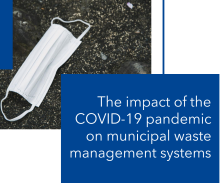
ACR+ has run a survey targeting municipal and local authorities (and their waste operators) to understand and assess the impact of the COVID-19 on their waste systems, in particular regarding the services provided, the quantities collected, the health and safety measures, as well as the finances and communication to users.
The report presents the main information and trends coming out of this survey. It also provides an overview of the measures taken by local authorities to tackle the first wave of the COVID-19 pandemic and the lockdown measures.
Local data were collected to analyse the impact of municipal waste generation and sorting performances. Several illustrations of good practices addressing key challenges are also highlighted.
In 2018, Hjørring Municipality decided to embark on a pilot project to increase the recovery and recycling of bricks when procuring demolition services for two buildings at the end of their functional life. Once cleared, the sites were destinated to be a part of a new climate adaptation project including a new rainwater collection basin and a recreational area.
The city of Ludwigsburg in Germany has a sustainable development strategy that includes the use of procurement to achieve its sustainability goals, instructing all public procurement departments to follow “Cradle to Cradle”principles in their procurement and awarding criteria.
In 2018, the Croatian city of Koprivnica needed to replace a prefabricated kindergarten. Instead of demolishing the building entirely, Koprivnica opted for Green Public Procurement (GPP) and aimed to maintain as much of the physical structure as possible, while refurbishing and improving it.
Sitra works with partners from different sectors to research, trial and implement bold new ideas that shape the future. It aims to make Finland a pioneer in sustainable well-being.
It is a future-oriented fund which creates preconditions for reform, spurring everyone towards making a change and providing opportunities for co-operation.
Sitra’s work focuses on supporting a fair transition to a circular economy and investigating how business can be based on sharing instead of ownership. Sitra is also working to advance circular trade policies, to increase the understanding of environmental effects of digitisation and to explore the potential of the circular economy to safeguard biodiversity.