The ITENE Research Centre is a Knowledge Transfer Office, set up in 1994.
ITENE provides companies with cutting-edge knowledge and technology to build a safer, more sustainable future. It aims to generate scientific and technological knowledge that it transfers to companies through R&D and innovation projects and consultancy, testing and training services.
It delivers solutions in four main areas:
sustainable materials and technologies for the circular economy;
design, safety and functionality in packaging;
chemical exposure and air quality monitoring;
logistics and smart mobility.
Current projects include FLEXIZYME: Flexible and adaptable enzyme biotechnology platform for the sustainable industrial production of bio-based fatty amines from waste.
By using residual streams, we can take a big step towards a circular, sustainable food system. This shift does require cooperation, however...
Foodvalley NL aims to promote the shift to a sustainable global food system. One of its projects is the Upcycling Community: an international group of partners collaborating on upcycling food losses. There are still many barriers to this circular approach, however, so they are focusing on:
bringing together a diverse and impactful group of business partners with a shared interest in upcycling food losses;
encouraging purchasers and product developers to replace virgin ingredients;
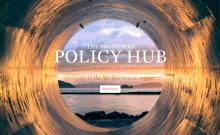
Medwaves, the UNEP/MAP Regional Activity Centre for Sustainable Consumption and Production, is about to launch the Switchers Policy Hub, a space for policymakers aiming to enable the transition towards a green and circular economy in the Mediterranean region.
Policymakers and other organisations are asked to respond to a survey by 15 July 2022 to help Medwaves build a more impactful Policy Hub.
The conference Towards a Circular Economy: Competences for Youth aimed to enable participants from different backgrounds to learn more about the outputs from the Circular Economy - Sustainable Competences for Youth (CESCY) project, to share their views and to hear from experts from different sectors.
The worsening climate crisis and the growing scarcity of natural resources have increasingly demonstrated the limits of our predominantly linear economy. There is no question that our business models and practices must become more sustainable and circular. It is therefore essential that young people be prepared to contribute and lead the way towards a more circular economy in Europe and beyond.
The Balearic Islands have adopted a new law on urgent measures to promote the sustainability and circularity of tourism, introducing a strategy for circularity.
NP-bioTech uses a biocatalyst, adsorbed onto an inert material (catalytic substrate). This enables the accelerated fermentation of critical biomass (such as citrus pulp or sewage sludge), transforming it into a biostabilised and pasteurised material with excellent agronomic properties.
The Hydro Ben project focuses on resource recovery for reuse in other industrial activities. It consists of recovering fatty substances from wastewater in professional catering facilities, by means of a special device which is placed under the sink.