The 6th edition of ACI's European Biopolymer Summit will bring the participants up to date on environmental projects, feedstock’s landscape, and the role of biopolymers in the circular economy.
The Luxembourg Wood Cluster was set up in 2016 as a platform for discussion between all players in the wood value chain. One focus is establishing a closed loop for wood. It is managed by Luxinnovation, Luxembourg’s national innovation agency.
The Cluster is intended to be a place to get expert support and connect with key players in the wood processing domain, in order to become more sustainable and competitive through innovation.
It connects users with potential partners in the business and innovation ecosystem. The Cluster regularly organises information and networking events and thematic and technical workshops, and facilitates knowledge transfer and intersectoral R&D. It promotes pilot projects of interest to the wood processing industry and supports cooperation initiatives.
'The circular economy and the bioeconomy — Partners in sustainability' is the third EEA report on the circular economy. It aims to support the framing, implementation and evaluation of European circular economy policy from an environmental perspective. It shows that the two policy agendas have similar objectives and areas of intervention, including food waste, biomass and bio-based products, and that they would benefit from stronger links, particularly in product and infrastructure design, and collaboration throughout the value chain.
The increasing demand for food, feed, biomaterials and bioenergy resources could worsen the over-exploitation of natural resources. By extending the lifetime of products and recycling materials, a circular bio-economy approach can help retain material value.
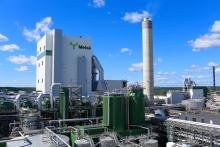
Metsä Fibre produces wood-based bioproducts, such as pulp, sawn timber, biochemicals and bioenergy. They have a strong focus on recovering waste and side streams and minimising the amount of waste going to landfill.
Ljubljana is faced with significant overgrowth of Japanese knotweed, a plant on the list of 100 most invasive non-native species worldwide. Ljubljana teamed up with the Re-generacija collective of young designers and architects focusing on issues connected to social and environmental well-being, as well as some other stakeholders, to prevent excessive overgrowth of the plant and reuse it.
Achieving the 2030 UN Sustainable Development Goals and Paris Agreement climate targets will hinge upon the global transition to a low-carbon circular economy. Replacing finite and fossil-based materials with responsibly managed renewable materials could decrease carbon emissions whilst reducing dependency on finite resources.
However, the role that renewable materials can play in the circular economy is often under-rated, and, so far, most of the conversation has focussed on biodegradability, instead of the role they could play in reuse, remanufacturing, and recycling streams. The aim of the Collaborative Project was to start a conversation on the role of renewables in the circular economy.