The European Bioeconomy Clusters’ Alliance is a new strategic initiative uniting 12 national and regional bioeconomy clusters across Europe. Its mission is to amplify the voice of the bioeconomy sector, drive policy advocacy for a circular and sustainable economy, and enhance cross-sector collaboration.
The launch event will bring together key representatives from the European Commission, industry leaders and bioeconomy sector stakeholders.
The topic this year is Circular solutions for a competitive EU.
On 3-4 June, the conference will feature high-level debates on policy aspects of circular economy. On 5 June, in-depth discussions among stakeholders will focus on unleashing the circular economy’s potential for a competitive and resource-efficient Europe.
The Basque Government has approved a list of 64 clean technologies eligible for tax deductions amounting to 30% of the investment. The goal is to make production processes more efficient by using equipment with a high environmental performance and so accelerate the climate and circular transition of SMEs in the Basque Country.
The European Commission has just released its Competitiveness Compass, a roadmap for EU action over the next five years which lists what needs to be done to enable the European economy to flourish.
It sets out ways and means to deliver on the imperatives identified by the Draghi Report to boost competitiveness: closing the innovation gap, a joint roadmap for decarbonisation and competitiveness, and reducing excessive dependencies and increasing security.
The circular economy is seen as part of the answer.
This conference aims to provide an inspiring platform to explore cutting-edge microbial solutions addressing global challenges in health, industry, the environment and the transition to a circular economy.
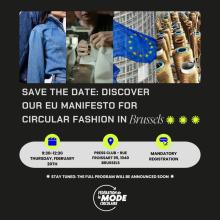
The Fédération de la Mode Circulaire (Circular Fashion Federation) is organising an event which will mark a milestone in their journey towards sustainable fashion: the release of their EU Manifesto for Circular Fashion. This manifesto outlines a policy roadmap for the European Union to leverage circular fashion as a means to bolster its textile industry, promote fair competition and champion environmental and human rights standards.
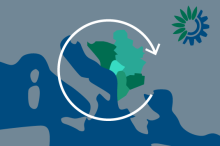
The Western Balkans need to boost their capacity to implement circular economy concepts and practices that go beyond waste management. The CSCP, VITO and the European Environment Agency accordingly launched the Capacity Building on Circular Economy in the Western Balkans project.
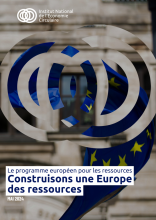
INEC, a leading think tank on issues related to the preservation of natural resources, has published its European Resource Programme.
It defines ways to preserve natural resources, focusing on six resources that will be crucial for energy, the economy and the environment: water, wood, li-ion batteries, permanent magnets, copper and building materials.
The Circular Economy package has merely resulted in measures targeting consumers rather than authorities. Positive initiatives such as the digital product passport aside, this vision of the circular economy is not sufficiently integrated into decarbonisation goals. INEC's realistic measures, the result of broad debate between stakeholders, aim to transform the economy and make it genuinely circular.
French regulations on the circular economy in the construction sector have evolved significantly in recent years. INEC and Altes Avocats have produced an accessible guide to help stakeholders apply those regulations and share best practices.
The 2025 Basque Circular Summit will be the largest event on the circular economy in southern Europe this year. It will analyse the challenges and opportunities posed by the circular economy for companies, society and the economy in the Basque Country and show what has already been achieved.