In this book, Jacqueline Cramer shows how network governance can power the circular economy. Network governance is about building a coalition of partners, which all fulfill a specific function in the network and are aligned by so-called transition brokers. By complementing conventional, public governance with this new form of governance, the best of both worlds is created.
Prof. Cramer shares her huge experience of implementing numerous circular initiatives in the Netherlands. As a practitioner and scholar, she has identified ten guiding principles for building circular initiatives, based on network governance. These guidelines can support everyone who wants to start or expedite a circular initiative.
Extended Producer Responsibility Schemes (EPR) are increasingly used across Member States to finance proper waste management. The workshop discussed the take-aways, benefits but also shortcomings of EPR Schemes, in order to focus on the various areas of improvements. Particular emphasis was placed on the role played by eco-modulation of fees.
At a moment when the EU stakeholders hold their breath for the EU Textiles strategy to be published, this workshop aims to give a final signal to the policy makers that a high level of ambition needs to be maintained in the upcoming proposal in order to create a watershed moment for the textile production and consumption, and more importantly for its global impact on the society and environment.
It has been established that the circular economy has a high leverage effect and some progress in this field has been made, but the circular economy has yet to top the political agenda. A strategic approach to circularity is urgently needed and should be developed, managed and implemented in a cross-ministerial capacity in line with efforts at EU level and together with partner nations.
Against this backdrop, the German Council for Sustainable Development (RNE) recommends organising the transition to circularity via a new, cross-ministerial governance mechanism coordinated by the German Federal Chancellery. RNE’s statement covers a further 13 recommendations, ranging from the need for social safeguarding instruments to expanding education and research.
The Cities & Regions Leadership Group in 2021 continued the work on the analysis of indicators to measure the transition to the circular economy in cities and regions.
This workshop capitalized on those discussion points, gearing the discussions towards the definition of operational cooperation leads between different initiatives supporting CE transition in cities and regions.
The European Commission is currently working on a revision of the Waste Framework Directive. This revision aims to improve the overall environmental outcome of waste management in line with the waste hierarchy and the implementation of the polluter pays principle. The call for evidence is open for feedback until 22 February 2022.
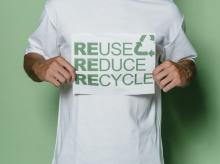
The goal of the circular economy is to take full advantage of all available resources through reducing, reusing, repairing and recycling. The recent Nordic Circular Summit in Copenhagen covered topics from public administration programmes to innovative techniques and renewable practices in the marine and food industries.
What can we learn about the circular economy from the Nordic perspective? Find some answers in this position paper.
Although previous researchers have explored the circular economy practices of different businesses in various contexts, only a few papers have focused on the sustainable preparation and consumption of food in the tourism and hospitality industry. This paper sheds light on case studies from hotels, restaurants and cafés that are located in urban tourism destinations.
This research suggests that catering businesses can implement a number of responsible initiatives by introducing preventive measures and recycling practices to curb food loss and the generation of waste. In conclusion, it finds that there is scope for regulatory authorities and policy makers to encourage hospitality practitioners to minimise food waste.
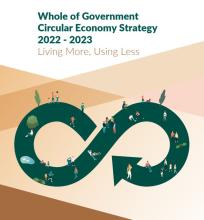
The Whole of Government Circular Economy Strategy is Ireland’s first national circular economy strategy. The Strategy is a key addition to the Government’s drive to achieve a 51% reduction in overall greenhouse gas emissions by 2030 and to get on a path to reach net-zero emissions by no later than 2050, as per commitments in the Programme for Government and the Climate Act 2021.
The Strategy explains what the circular economy is, why Ireland needs to deliver on a circular economy and how national policy will develop to support that goal. A circular economy can have positive environmental, economic and social impacts, such as reduced plastic pollution, new jobs and better quality, longer lasting consumer products.