Cities and local areas play a major role regionally in promoting the launch and implementation of systemic changes needed for the transition towards a circular economy. The ECESP Leadership Group on Cities and Regions focuses on this approach. In 2021, three meetings and two EU Circular Talks (EUCT) were organised.
The circular transition must be accompanied by a systemic change in the architecture of the tax system to head towards circular taxation, as the inherited tax system of today reinforces the linear economic model. A thorough examination of all aspects of tax design and its effects is needed during the process of switching to circular taxation.
Madeira Circular brings together key actors for the transition to the circular economy in the Autonomous Region of Madeira. This includes civil society, businesses, public administrations and the scientific and academic communities.
It looks at regulations and financing and explores sectors relevant to Madeira which can be shifted to a more circular approach, such as tourism, production of local products and civil engineering.
The platform looks at recycling and how to combat food waste and provides recommendations in the fields of water, waste and energy.
The Madeira Circular Agenda bolsters the position of the Autonomous Region of Madeira (RAM) as a circular economy hotspot.
It involves civil society and public and private entities in a system that seeks to keep materials in the economy, and to promote efficiency, circularity and sustainability as competitiveness and differentiation factors for the regional economy. The Agenda also aims to ensure that RAM companies act as circular economy leaders in their respective sectors, adopting best practices and creating innovative solutions based on circularity principles, particularly in sectors deemed critical for the region, namely agri-food, construction, tourism, social sector and the sea.
To evaluate the impact of adopting circular economy principles in cities – in terms of emissions, quality of life and resilience – Enel and ARUP, with the scientific support of the Enel Foundation, have collaborated on a research project focusing on four cities: Bogotá, Genoa, Glasgow and Milan, all committed to enhancing the energy transition.
The study concerns three key urban sectors:
mobility
built environment
energy systems.
It entailed interviews with stakeholders and analyses of existing decarbonisation policies and circular strategies. A reference model was used to help identify the most significant circular actions that could lead to a reduction in GHG emissions in three sectors.
The results could be used as a guide for decision makers.
The Flemish Government wants to reduce the material footprint of consumption in Flanders by 30% by 2030. In order to know whether Flanders is on the right track and makes well-considered policy choices, data are needed. That is why Circular Flanders and the Circular Economy Research Centre launched the Circular Economy Monitor on 17 November.
Within the framework of the Circular Economy Initiative Deutschland (CEID) and its three interdisciplinary and cross-sectoral working groups, more than 130 experts from industry, science and civil society have summed up their findings in the Circular Economy (CE) Roadmap for Germany, which consists of a consolidated opinion addressing society as a whole.
This Roadmap, which has focused - right from the beginning - on shaping a consistent and common target vision for a circular economy in 2030, is a scientifically-based framework for action that systemically describes the necessary steps for Germany to transition to a CE and provides decision-makers from politics, industry and science with concrete recommendations for action.
This study highlights that, while international trade has a vital role to play, policy responses to-date have largely been designed at the national level and in an uncoordinated manner.
ICC Secretary General John W.H. Denton says that "the report shines a light on how well-intentioned national policies are inadvertently hindering the adoption of circular solutions in the real-economy. Simply put: the transition to a circular economy can only be enabled at scale by harnessing the power of cross-border trade to unlock economies of scale and comparative advantages. We hope our analysis will serve as a clarion call for a concerted global effort under the auspices of the World Trade Organization to enable new patterns of trade capable of meeting global climate and sustainability goals".
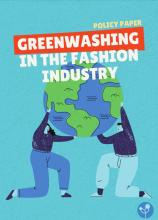
This policy paper sheds light on the false claims and misleading communication campaigns advertised by the fashion industry. It discusses the environmental impacts associated with these greenwashing claims in relation to three issues: materials, circularity and climate.
The paper further presents the most common statements and strategies used by fashion companies to convey their alleged engagement in environmentally sustainable practices.
Finally, recommendations are given on the policies needed on the EU-level to ensure that fashion brands are providing accurate and verifiable information to consumers, for them to make informed choices.
With this policy paper, Generation Climate Europecalls on the EU to address the growing issue of greenwashing in the fashion industry.