"Chambers for a Circular Economy - Actions to Support SMEs' Transition to a Circular Economy" aims to offer a clear overview of the wide range of initiatives led or co-managed by Eurochambers in the field of the Circular Economy, with the intention not only to inform and share innovative actions, but also to spur and motivate synergies, triggering collaborations and the creation of new business models. The aim of each and every of these projects is to enable businesses to evolve from a linear to a circular mode of production and consumption.
This publication presents a total of 32 projects initiated or co-led by Chambers in 13 countries, and categorized under 5 main topics:
Vélosophy is part bicycle, part philosophy. It brings to life the potential of recycling by partnering with Nespresso to craft a bike from recycled aluminium coffee capsules.
Also the standard Vélosophy bikes are made with recycled aluminium. The fork & frame have always been made with as much recycled aluminum allowed and possible according to the industry standard and legal requirements.
Enea has designed an industrial symbiosis platform intended for businesses and other entities located in Italy.
It aims to bring together supply of and demand for resources (materials, energy by-products, water, services and expertise) and create the conditions to transfer these between stakeholders. The goal is to create a network of Italian enterprises in line with the principles of industrial symbiosis.
Enterprises register and list at least one resource they want to share, and a match is identified. The platform can also analyse an enterprise's resource management system with a view to finding ways to optimise it, both internally and externally (based on collaboration or industrial symbiosis).
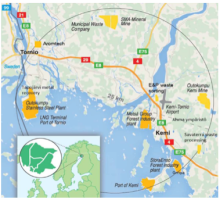
The Circular and Bioeconomy Centre is based ona cross-sectoral industry co-operation involving mining, metal, and forest industries and service companies in the Kemi-Tornio economic region, and accounts for about 80 % of Lapland's industrial production.
Funghi Espresso is an innovative business that produces fresh mushrooms in a sustainable and natural way, using coffee grounds from local bars and restaurants as a growing medium.
DyeCoo has more than 20 years of experience in CO₂-based textile processing technology. It dyes fabrics using CO2 rather than water – and is the only company which does this at industrial scale.
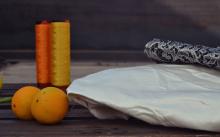
Orange Fiber has closed the loop on orange waste by patenting a technique to turn the cellulose fibre in citrus waste into a fabric which is suitable for the fashion industry.
Favini produces various lines of high-quality paper. Each is made with secondary raw materials which give the paper specific characteristics: the Remake line reuses pulp from discarded residue from leather manufacturing, which gives the paper a particularly soft feel.
The Luxembourg Wood Cluster was set up in 2016 as a platform for discussion between all players in the wood value chain. One focus is establishing a closed loop for wood. It is managed by Luxinnovation, Luxembourg’s national innovation agency.
The Cluster is intended to be a place to get expert support and connect with key players in the wood processing domain, in order to become more sustainable and competitive through innovation.
It connects users with potential partners in the business and innovation ecosystem. The Cluster regularly organises information and networking events and thematic and technical workshops, and facilitates knowledge transfer and intersectoral R&D. It promotes pilot projects of interest to the wood processing industry and supports cooperation initiatives.