The Challenges, Opportunities and Pathways for European Businessin Circular Economy report is a EUROCHAMBRES initiative launched in order to better understand if and how the circular economy will benefit European businesses, and to delineate a successful transition. This will be the basis for a policy strategy to contribute to an enriching debate on future legislative proposals at European level.
This report is a comprehensive meta-analysis of the most up-to-date quantitative studies on the circular economy, and elaborates on nine industrial sectors (agriculture, construction, mobility, hospitality and food services, metal manufacturing, electronics, textile, food & drink manufacturing, and plastics) including case studies.
Following successful 2017 and 2018 editions, both in Krakow, MEERI-PAS and the WRMC organised a 3rd edition of this conference in Racławice from 2 to 3 July 2019 for more than 200 participants.
The EU faces multiple challenges (climate crisis, environmental disasters, a lack of competitiveness, falling behind in the digital race, etc.) that it will need to address if it is to ensure long-term sustainable prosperity for European citizens. At the same time, there are two ongoing transitions – the creation of a circular economy and the digital transformation – that could provide the means to address these challenges, if they are managed well.
As the EU and national policymakers are making significant efforts to promote a circular economy on the one hand and a digital economy on the other, Annika Hedberg and Stefan Šipka, together with Johan Bjerkem, argue that it is time to align the agendas as a means to achieve greater sustainability and competitiveness.
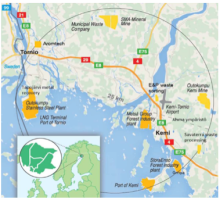
The Circular and Bioeconomy Centre is based ona cross-sectoral industry co-operation involving mining, metal, and forest industries and service companies in the Kemi-Tornio economic region, and accounts for about 80 % of Lapland's industrial production.
This report investigates how a more circular economy can contribute to cutting CO2 emissions. It explores a broad range of opportunities for the four largest materials in terms of emissions (steel, plastics, aluminium, and cement) and two large use segments for these materials (passenger cars and buildings). The key conclusion is that a more circular economy can make deep cuts to emissions from heavy industry: in an ambitious scenario, as much as 296 million tons CO2 per year in the EU by 2050, out of 530 Mt in total – and some 3.6 billion tonnes per year globally. Making better use of the materials that already exist in the economy thus can take EU industry halfway towards net-zero emissions.