The circular economy is attracting significant interest worldwide, as evidenced by the numerous government strategies, business commitments and partnerships devoted to its development. At the EU level, the Action Plan for the Circular Economy and several other policy documents have demonstrated a strong commitment to move towards a low-carbon and circular economy. While the calls for a new economic model grow louder, it is clear that the transformation of markets and industries on a large scale will not be an easy achievement. It will require well-designed and ambitious policies to foster the transition as well as new business models. Against this background, CEPS brought together executives from major multinational companies as well as representatives of business associations and others.
Founded in 2015, the Circular Economy Coalition for Europe is a platform of scientists and universities in the fields of resource management, waste management and anthropogenic metabolism. Working to support the transformation of the EU to an effective and efficient circular economy, the experts provide the European institutions, national decision-makers, businesses and the interested public with facts and data based on scientific methods and evidence.
Laura Cutaia, researcher at ENEA, is an Environmental Engineer (1996) with a PhD in raw materials engineering (2002). Her main research topics are:
Industrial ecology and symbiosis,
Technology for raw and secondary materials treatment,
Resources management,
Life Cycle Assessment,
Environmental certification,
End of life management.
Laura Cutaia is responsible for making the most of resources at ENEA , where she is working on the circular economy and resource efficiency, industrial ecology and symbiosis, LCA, environmental certification schemes, the REACH regulation and sustainable industrial areas (more information).
Laura Cutaia is also president of SUN - Symbiosis Users Network (Italian network for industrial symbiosis) and president of UNI CT 057 on the circular economy that works with ISO TC 323 on the circular economy. UNI is the Italian body responsible for standardisation.
As an adviser for environmental and climate policy, Leon de Graaf particularly follows policies related to the circular economy, trade and climate, low-emission mobility, implementation of the Paris climate agreement (COP21) and the European emission trading system (EU ETS). He is also deputy manager of BusinessEurope's corporate Advisory and Support Group (ASGroup). Prior to joining BusinessEurope, Leon worked at the research consultancy Ecorys, focusing on renewable energy and international development issues, at DG COMP on energy and environmental subsidies in Europe, and at the Dutch Environmental Assessment Agency (PBL) on indirect ETS costs for energy-intensive industries. Leon has a MSc in environmental economics and climate change from the London School of Economics, and a BSc in business economics from the University of Groningen.
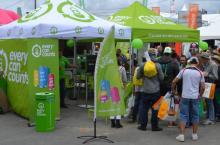
The “Every Can Counts” programme aims to improve recycling by enabling and encouraging people to recycle drinks cans used outside the home (e.g. workplaces, festivals, tourist locations, etc.).
Aurubis, an expert in multi-metal recycling, and Grillo-Werke, which specialises in zinc and sulphur products, have set up a perfect closed loop for non ferrous trace elements.
Residual zinc from copper production is used by Grillo-Werke as a secondary raw material for zinc sulfate. Residues from this production - including copper, tin and lead - are then fed back to Aurubis.
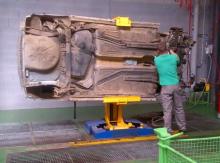
INDRA Automobile Recycling has been a key player in vehicle recycling in France for the last 40 years. It dismantles and processes the vehicles and then sells the resulting parts and materials.