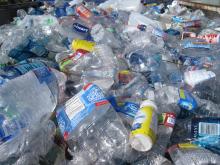
The Gr3n project aims to contribute to the fight against plastic proliferation in the world by introducing an innovative process for profitable plastic recycling. This process uses microwave technology on a chemical reaction, and results in a ground-breaking, economically efficient chemical recycling process for PET.
BE O Lifestyle is a Dutch company which has developed two forms of plant-based plastic. They manufacture water bottles and coffee cups from sugar cane residue and used vegetable oil. These products are reusable, repairable and recyclable - and nice to look at!
Ocean Sole takes the world's most widely worn shoe, the flip flop, and turns it into art, and the Dutch company Nic&Mic sells it in the Benelux countries. Ocean Sole is Kenya-based and began with the desire to clean up beaches that were heavily polluted with plastic and flip flops. Ocean Sole has grown to employ 90 Kenyans.
CuRe has discovered a smarter and scalable technology for creating a fully circular polyester chain. It rejuvenates any type of used polyester by removing the colour and converting it into clear pellets with the same properties as virgin grade polyester.
On 31 May, it was announced that the European Commission issued guidance on the EU rules on single-use plastics and adopted an Implementing Decision on the monitoring and reporting of fishing gear. These rules aim to reduce marine litter from single-use plastic products and fishing gear and promote the transition to a circular economy.
Grown bio is a biotechnology company that has developed an innovative use for mycelium, the network of mushroom roots. It uses the mycelium as a binding agent for agricultural waste to create fully biodegradable and toxic-free packaging or insulation material.
Borealis manufactures polypropylene using renewable feedstock provided by Neste. Specifically, Neste produces renewable propane and Borealis converts it to renewable propylene and subsequently to renewable polypropylene.
ALBA Group is a major company active in recycling, environmental services and the supply of raw materials. It has come up with a method for producing plastic using secondary raw materials.
Trifilon uses a consistent source of plastic from a European stream and reinforces it with plant fibres, thus improving the properties of the recycled plastics. These can be used to produce a range of colours and surface finishes, matte or polished.
Since 2010, Philips has been working on introducing recycled plastics into its product portfolio. The baseplate of Senseo Original coffee makers, the company’s most popular model, has been changed to 95% post-consumer recycled plastic.