On the Asphalt (O.T.A) is a French brand that has developed sustainable and eco-friendly unisex sneakers made of recycled tyres and leather scraps from a glove factory.
SEA2SEE, based in Catalonia, designs and produces optical frames and sunglasses in Italy, as well as watches in Switzerland, entirely made from recycled marine plastic collected by fishermen in Spain, France and West Africa.
The ReSeaclons project, led by the Marine Institute of the Seaquarium in Grau-du-Roi, France, is committed to bringing together fishermen, seafarers, public authorities, associations, companies, civil society and holiday-makers to help reduce marine pollution.
Re-Match has a recycling process for synthetic turf, recovering up to 95% of the materials, which is accredited with the EU’s Environmental Technology Verification. Their patented technology separates the sand, backing, rubber and plastic fibre from used synthetic turf. These materials can then be sold or used in a wide variety of new products in different industries.
In this report, nudging is explored as a complement to traditional policies (regulation, economic incentives and information campaigns) to reduce the use of single-use plastics. Behavioural insights are used to develop different options to nudge consumer preferences from single-use cups to more sustainable alternatives.
Based on careful reviews and analysis of previous nudging projects, three green nudges are proposed to catalyse this shift.
Fil&Fab has developed a technique to transform disused end-of-life fishing nets into plastic pellets, which are then used to create a series of new plastic products.
In 2015, the European Commission adopted the Circular Economy Action Plan to help stimulate the transition towards circular economy. The growing number of plastic products and packaging marketed as ‘biodegradable’ or ‘(home) compostable’ raises the question of the extent to which biodegradability and compostability of plastic is beneficial in the context of the transition towards a circular economy.
The study assesses this question, identifying conditions in which (home) compostability of products could be of added value, compared to reuse and other forms of recovery. The results indicate weak evidence in favour of beneficial agronomics associated with compostable plastic material. Choices of materials for products and packaging should prioritise recyclability over compostability.
AIMPLAS, the Plastics Technology Centre, is collaborating with the Microbiology and Ecology Department of the Universitat de València on the DURPROMAT project, led by the industrial company DURPLASTICS. They are working to develop a new type of plastic that is more resistant to impact, UV radiation and the action of marine organisms.
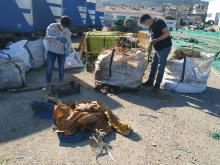
The RepescaPlas closed its third year with the collection of 4.2 tonnes of marine litter and excellent results in terms of recovery of this litter through chemical recycling. The project has now entered its fourth phase, in which it is expected to strengthen the industrial-scale management and treatment of marine litter.