The Navigation Tool is designed to explain the different steps in the plastic recycling process, from collection through sorting to reuse.
It gives information on the TRANSFORM-CE project’s findings, shares links to project reports and publications, gives the contact details of the project’s partners for questions or collaboration, explains IEM and AM, and suggests uses for recycled plastics.
This year, ACR+ is organising not one but three events:
The ACR+ General Assembly 2023 (31 May) to help shape the direction of the network: organisations and ACR+ members will introduce, discuss and challenge ideas and solutions,
The Circular Economy Hotspot (29 May – 1 June), which will explore three key themes: Policy in Practice, Citizen Engagement and Innovation & Collaboration,
The 14th EWWR Awards Ceremony (1 June), which will assemble the 16 most outstanding initiatives on circular and sustainable textiles from among the 16 000 carried out during the EWWR 2022
Threading-CO2 project aims to scale-up and demonstrate its first-of-its-kind technology producing high-quality commercially viable sustainable PET textile products from CO2 waste streams.
The overall objective is to significantly reduce the carbon footprint of the textile industry, using a circular manufacturing approach and running on renewable energy sources.
ED is a digital label providing information about the product's packaging: its components, the materials it's made of, and how to dispose of them properly.
All you need to do is scan the QR code on the packaging to get real-time, geolocated and accurate information on how to dispose of it.
Tyres are complex products essential to the mobility of millions of Europeans. Likewise, tyre recycling is essential to the sustainability of the entire tyre value chain, be it in terms of resource efficiency or climate neutrality. Yet, despite a landmark landfill ban in 2006, much needs to be done to improve the circularity of tyres. To give an order of magnitude, today, for one tyre that is recycled, one tyre gets incinerated for energy recovery, and the worse in terms of end-markets opportunities is yet to come.
The EuRIC conference on tyre recycling takes place in Brussels on 18 April 2023.
Since 2013, the EU Ship Recycling Regulation has provided a regulatory framework for the recycling of EU-flagged ships. It acts as a benchmark for ship recycling legislation around the world.
The European Commission has launched an online public consultation on the evaluation of the Ship Recycling Regulation that will run until 7 June 2023.
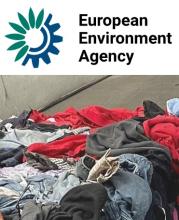
Textiles are on average the fourth-highest source of pressure on the environment and climate change from a European consumption perspective, as shown in previous EEA briefings.
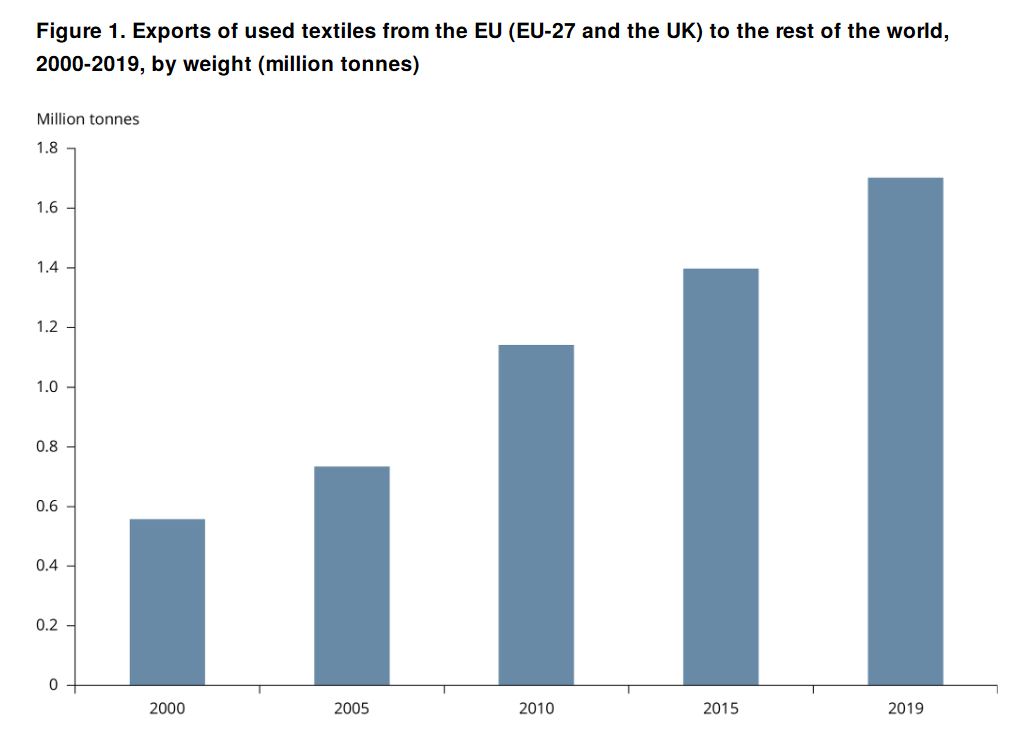
Europe faces major challenges managing used textiles, including textiles waste. As reuse and recycling capacities in Europe are limited, a large share of used textiles collected in the EU is traded and exported to Africa and Asia, and their fate is highly uncertain.
The common public perception of used clothing donations as generous gifts to people in need does not fully match reality.
In the course of two decades, there has been a threefold increase in EU used textiles exports
The objective of the event "Enhancing the circularity in the Construction Sector" on 26 April 2023 is to
Present the EU's Circular Economy Action Plan and the latest legislative developments to make the construction sector greener (including the revised EU Construction Products Regulation)
Present the METABUILDING platform: fostering new cross-sectoral, cross-border industrial value chains
Showcase successful collaborative projects and METABUILDING winners on the building & recycling sector
Discuss the circularity and recycling challenge for the construction sector: state of play and future prospects.
The REEPRODUCE project will break new ground by establishing a sustainable and complete European industrial-scale value chain for recycling the rare earth elements in permanent magnets. REEPRODUCE will capitalise on the knowledge generated by previous R&D projects (REE4EU) and tackle all the remaining technical challenges along the value chain. This innovative technique will produce new permanent magnets using environmentally-friendly technologies at a competitive cost and using end-of-life products as a resource.
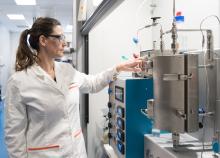
The Swedish company Re:Lab AB has developed a chemical circular economy solution to convert plastic items used in research laboratories into a syngas comprised of carbon monoxide and hydrogen. These two components are in high demand for the production of chemicals and plastics.