In its position paper, Eurocities aims at contributing to the revision of the EU legislation on packaging and packaging waste by making proposals on:
packaging design (to facilitate separate sorting by citizens, and further dismantling for reuse or recycling, i.e. less complexity in packaging materials)
compostable/biodegradable plastic packaging (citizens cannot distinguish between biodegradable/compostable and more ‘conventional’ ones; the Commission should assess if this packaging can benefit the environment or create more littering and hamper waste collection, reuse and recycling)
reuse and recycling (new legislation should consider EU-wide mandatory labelling to identify packaging as reusable, recyclable or compostable) and
This reflection paper explains how materials will enable solutions for a healthy, safe, resilient society and stronger economy to answer citizen demands. It includes strategic research agendas (SRAs), proposals, solutions, and recommendations of Alliance for Materials A4M community towards Horizon Europe in the post-COVID scenario. COVID-19 has affected the development of current strategies to face societal challenges and led to a reflection on a new global economic model where circular economy will play a prominent role.
The paper puts forward proposals for strategic research and innovation activities to the European Commission, Member States, and the European Parliament, taking into account the objectives of the Green Deal Priorities and Recovery Plan.
The Finnish foodtech company, Solar Foods, produces natural single-cell protein using simply renewable electricity and air, called Solein®. They bring to the market an entirely new kind of food that is both natural, and not dependent on agriculture, climate or the weather. The protein can be made in tough environmental conditions, such as the desert, the Arctic, or possibly even in space.
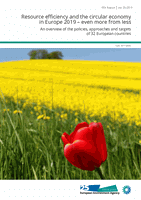
This European Environmental Agency Report presents an analysis of approaches and identifies trends, similarities and new directions taken by countries in resource efficiency and circular economy (CE). It is based exclusively on data provided by 32 Eionet members.
Its main objective is to stimulate exchange of information and good practice between countries and to support capacity building within Eionet.
Another objective is to contribute to various policy processes, including work carried out by European Commission, European Parliament and International Resource Panel.
The report addresses 6 elements:
material resource efficiency and CE in the EU
policy framework
monitoring and targets
examples of innovative approaches and good practice
The electrical and electronics industry has been contributing to Europe socially and economically for almost 100 years. However, its production, use and disposal are resource- intensive activities resulting in significant environmental and climate impacts.
This European Environmental Agency (EEA) briefing describes how increasing product lifetime and improving ‘circularity’ are essential steps towards reducing impacts from electronics.
Case studies of 4 different electronic product groups show there is potential for significant increases in their actual lifetime use. Extending the lifetime and delaying the obsolescence of electronics can significantly reduce impacts and contribute to meeting EU environment, climate and circularity objectives.
Major Cities in Europe - like Budapest, Copenhagen, Helsinki, Ljubljana, Oslo, Prague and Tirana - have signed the European Circular Cities Declaration inviting peers to join them! The have committed themselves to leading the circular transition and to new models of production and consumption, whilst improving human wellbeing and reducing emissions.
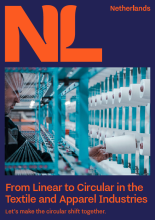
The brochure highlights Dutch circular frontrunners that make a change - just a fraction of the initiatives, organisations and technologies available. Only the most inspiring examples have been selected, with a potential to be upscaled and implemented in other parts of the world, hoping that they will also inspire and encourage others to collaborate and make a change.
Unverpackt in Kiel opened in February of 2014, becoming Germany’s first packaging-free store. Their goal is to reduce packaging and food waste and at the same time motivate customers to reflect on their own consumer behaviour.