On average, a European citizen produces half a ton of waste a year. This amounts to 2.5 billion tons yearly for the entire European Union.
The Joint Initiative on Circular Economy (JICE) is a partnership between the EU’s largest national promotional banks and institutions and the European Investment Bank to invest at least €10 billion in the circular economy by 2023.
It provides loans, equity investment, guarantees, innovative financing structures and technical assistance.
The initiative will support projects that prevent and eliminate waste, increase resource efficiency and promote circular business models. Eligible projects can be submitted to the respective JICE partners.
ReTuna Återbruksgalleria revolutionises shopping by being the world's first recycling mall in Eskilstuna, Sweden. ReTuna takes old items and gives them new life through repair and upcycling. The public can leave items in the recycling containers provided by the mall, and they are then redistributed to the shops.
PCDT buys used spare parts for home appliances from individuals whose appliances cannot be repaired and will then sell thems - with no margin of profit - to customers who can use them to repair their own appliances.
The project reCIRCULARte started in 2017: three unemployed people decided to reuse, recover and restore second-hand material or objects, giving them new life.
The Dutch economy is 24.5% circular. Measures in four key sectors can triple the national circularity rate and help the government achieve its ambitions for a fully circular economy by 2050.
On 3 June, Circle Economy launched the Circularity Gap Report for the Netherlands. The report shows that the Netherlands is a circular frontrunner: the country's circularity rate is three times higher than the global rate of 8.6%. Consuming 221 million tonnes of materials each year, the Netherlands retrieves one quarter from non-virgin, secondary sources. However, if the government is to achieve its ambitions of full circularity by 2050, a major overhaul of the national economy, including jobs, will still be necessary.
The European Manufacturers of Expanded Polystyrene (EUMEPS) is the voice of the Expanded Polystyrene (EPS) industry. It has published an op-ed welcoming the European Commission’s commitment to a Renovation Wave and the outline of its strategy shared in the roadmap published in May 2020. It believes that this initiative is a great opportunity for scaling-up current renovation rates and EU’s climate and energy efficiency goals.
EUMEPS agrees that increased renovation can be a key contributor to creating jobs and stimulating economic recovery in the context of the COVID-19 pandemic. It embraces the Commission’s finding that buildings are also critical for making circularity work and its objective to implement the Renovation Wave in line with circular economy principles.
Rue Rangoli is a French social enterprise that supports social organisations involved in upcycling or zero-waste and the design circular economy, based in Europe, Africa and Asia.
The city of Leuven, in Flanders, aims to play a leading role in initiating systemic change in cities and society at large.
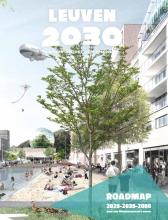
The Roadmap 2025 · 2035 · 2050, drawn up by Leuven 2030 and numerous experts, serves as a guide to achieving the goal of a climate-neutral city by 2050. In September 2019 a professional team of programme managers started on no less than 13 specific programmes, which will transform this unique plan into concrete actions and impact on the field.
Leuven Circulair finds its place in specific programme #09, outlining key actions for circularity in the city with a strong focus on social, repair, refurbishment, knowledge and expertise from the University of Leuven and local fablabs.