Commissioned by the Scientific and Technical Advisory Panel (STAP), which advises the Global Environment Facility (GEF), and co-authored by Circle Economy and Shifting Paradigms, this report uncovers the range of socio-economic and environmental co-benefits that circular mitigation interventions can bring to GEF countries of operation.
The report supports strategic advice by the STAP to the GEF and its implementing partners, and helps carve out a role for these bodies in accelerating the transition to a low-carbon circular economy. Its findings will be highly relevant to the development of future GEF projects and programmes across its different focal areas.
The Italian project BIOCOSI (BIOdegradable and COmpostable packaging for sustainable, circular and smart industry) came up with a revolutionary solution to the problem of wastewater in the dairy sector.
Guidance for evaluating waste prevention programmes provides guidelines and practical advice and highlights case studies to help all EEA member countries evaluate their waste prevention programmes.
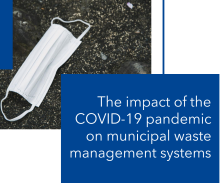
ACR+ has run a survey targeting municipal and local authorities (and their waste operators) to understand and assess the impact of the COVID-19 on their waste systems, in particular regarding the services provided, the quantities collected, the health and safety measures, as well as the finances and communication to users.
The report presents the main information and trends coming out of this survey. It also provides an overview of the measures taken by local authorities to tackle the first wave of the COVID-19 pandemic and the lockdown measures.
Local data were collected to analyse the impact of municipal waste generation and sorting performances. Several illustrations of good practices addressing key challenges are also highlighted.
The partnership between Herning and DFD has led to a new circular business model for the work clothing used by the municipality’s technical operations department.