Expertise in technology, medicine and the social sciences
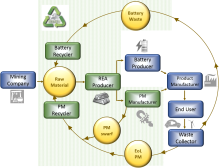
Rare Earth Elements (REEs) are considered as "key enablers" of green technologies. However, they are also the elements with the highest supply risk.
The EU funded project REE4EU has developed processes that may help to regain REEs from RE-containing waste streams.
The EU-funded CABRISS project aims at pioneering a circular economy dedicated to handling the critical situation of recycling the considerable amount of photovoltaic waste for the photovoltaic, but also for the electronic and glass industry.
The campaign “Be a Miljönär” [a pun which merges miljö (environment) with miljonär (millionaire)] has a long-term goal: reducing waste and making sustainable consumption a habit among people aged between 18 and 30.
The Dublin City University VALOR project is investigating potential recovery options for the Organic Fraction of the Municipal Solid Waste (OFMSW) and Bio-Stabilised residual waste (BSRW). The project fully diagnoses the recovery options for municipal solid waste and validates their use by determining their benefits and potential environmental risks.
Contaminated sediment from the Port of Dunkirk has been re-used in road structures since 2002, when the Port started to cooperate with the Ecole des Mines de Douai and various industrial partners in order to design alternative materials for stabilised sub-base road layers.
Tarpaper Recycling is a recycling specialist minimising the environmental impacts of construction waste. It has developed a patented method to recycle bitumen from roofing-felt waste by converting it into a material that can be used as a binder in asphalt production.
The BlueCity business park is one of Rotterdam's unique landmarks: formerly a water park resort, the complex is now a circular incubator housing over 30 startups experimenting towards a sustainable future.
The SaltGae project hasestablished real scale demonstration sites in Slovenia, Italy and Israel that show the long-term techno-economic performance of microalgae technology for the efficient treatment of saline wastewaters from the food and beverage industries.
CuanTec is a Scottish blue biotech company that replaces plastic with natural alternatives. Sourced from waters of the Atlantic, CuanTec takes waste from fisheries and obtains the natural biopolymer chitin. Their process uses biology rather than chemistry to create chitin and chitosan of high quality and purity, which are in demand for over 3 000 industrial uses around the world.
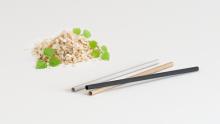
Sulapac has developed a fully biodegradable and microplastic-free material which can replace plastic. The bio-based material is both recyclable and mass-producible and is available as granules or final products.